Boost Curb Appeal and Property Value with Yavapai Landscaping

Enhance Outdoor Spaces with Yavapai Landscaping's Expert Solutions
Landscaping improves a property’s look and function, but common problems can undermine those benefits. This article outlines five issues Yavapai Landscaping, LLC can resolve efficiently so your outdoor spaces stay attractive and useful. We’ll cover fire-safe landscaping, pest control, water conservation, and irrigation maintenance so you can protect your property and make informed choices.
Beyond aesthetics, good landscape design and ongoing care protect property value, reduce maintenance costs, and create outdoor spaces that perform for years. Yavapai Landscaping approaches projects by assessing site conditions, prioritising safety and resource efficiency, and recommending practical steps that align with homeowner goals and budgets. Wherever possible, the firm favors solutions that streamline long-term upkeep while enhancing curb appeal.
How Can Fire-Safe Landscaping Reduce Wildfire Risks in Prescott, Arizona?
In Prescott, where wildfires are a real threat, fire-safe landscaping matters. It means designing and maintaining yards to lower fire hazards and protect people and property. By creating defensible space and applying proven practices, homeowners reduce the chance of fire spreading to structures. Yavapai Landscaping pinpoints hazard zones and applies targeted strategies to cut that risk.
Studies show that properties with well-maintained defensible space are significantly less likely to suffer severe damage during wildfires. According to the National Fire Protection Association, homes with proper fire-resistant landscaping have up to a 50% greater chance of surviving a wildfire.
Fire-safe landscaping is both proactive and ongoing: it includes initial site evaluation, plant selection and placement, and a maintenance plan for pruning, debris removal, and seasonal adjustments. The goal is to interrupt continuous fuel (vegetation) paths, reduce available ignition material near structures, and improve access for emergency responders when needed.
What Are the Key Fire Hazard Zones and How Does Yavapai Landscaping Address Them?
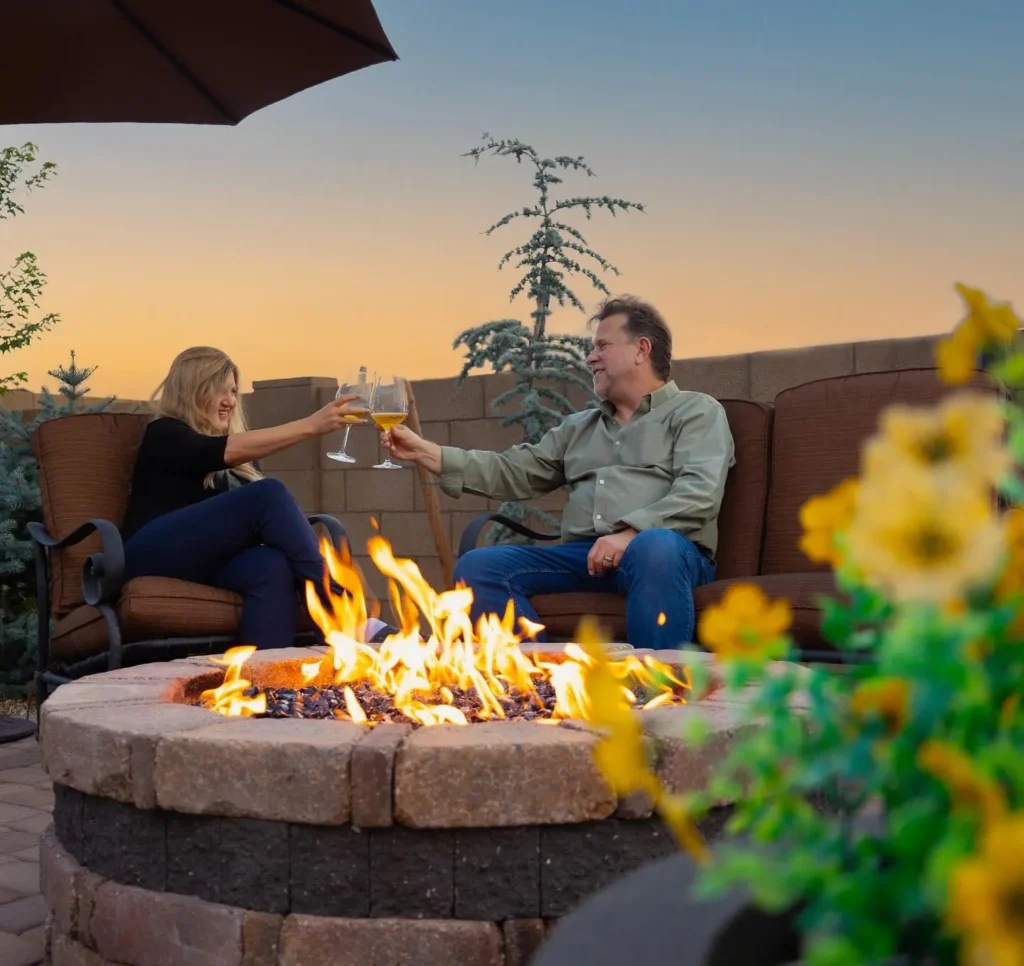
High-risk areas include dense vegetation, dry grasses, and spots close to buildings. Yavapai Landscaping inspects properties to find these zones, then creates defensible space, removes flammable debris, and selects fire-resistant plants. These actions lower the likelihood that wildfire will reach residential structures.
Research indicates that maintaining a defensible space of at least 30 feet around a home can reduce wildfire damage risk by up to 75%. Yavapai Landscaping applies this evidence-based approach to protect properties effectively.
In practice, the company evaluates the landscape in layers: the immediate area around structures (where fuel must be minimized), intermediate planting beds and tree placement (where ladder fuels can carry fire upward), and the outer landscape (where fuel breaks and clearances help limit spread). Recommendations balance safety with visual appeal so the property remains welcoming.
- Immediate perimeter: clear combustible materials, thin shrubs near foundations, and keep tree branches trimmed away from roofs and eaves.
- Intermediate planting: create spacing between groups of shrubs and trees to prevent continuous fuel corridors and to reduce crown fire potential.
- Outer landscape: limit dense thickets and use hardscaping features—paths, gravel, or low-combustion groundcovers—to break fuel continuity.
Regular maintenance schedules are essential; seasonal cleanups to remove dead leaves, pine needles, and other debris prevent accumulation that can increase ignition risk. Yavapai Landscaping provides checklists and recurring service options so homeowners can maintain defensible space year-round.
Which Fire-Resistant Plants and Design Techniques Enhance Property Safety?
Using fire-resistant plants like lavender, sage, and some ornamental grasses reduces ignition risk. Design choices—gravel paths and non-combustible hardscaping—add protection. Together, these measures improve safety while keeping the landscape attractive.
Scientific studies have shown that fire-resistant plants typically have higher moisture content and lower volatile oils, which significantly reduce their flammability. Incorporating these plants can decrease the speed and intensity of fire spread near homes.
When selecting plants, Yavapai Landscaping considers water needs, growth habit, and dormancy patterns. Fire-resistant plants are typically low in resin or sap, maintain higher moisture content through dry months, and present less fine fuel that ignites easily. Placement matters: even low-flammability plants should not be placed where they touch structures or create continuous cover that can carry fire.
Design techniques that increase safety while preserving aesthetics include strategically placed rock or decomposed granite pathways, raised beds with non-combustible edging, and maintenance-friendly mulches. Proper irrigation and pruning routines also keep vegetation healthier and less prone to desiccation.
What Water Conservation Landscaping Techniques Does Yavapai Landscaping Recommend?
Water conservation is vital in arid Central Arizona. Yavapai Landscaping recommends drought-tolerant plants, smart irrigation, and efficient design to preserve water while maintaining appealing outdoor spaces.
According to the Environmental Protection Agency, landscaping practices that incorporate drought-tolerant plants and efficient irrigation can reduce outdoor water use by up to 50%, making a significant impact in water-scarce regions.
Effective water-wise landscapes begin with a soil and site evaluation: understanding soil texture, drainage, exposure, and microclimates lets designers place plants where they perform best with the least supplemental water. Mulching, soil amendment, and grouping plants by water need (hydrozoning) are standard practices that reduce waste and simplify irrigation scheduling.
How Do Drought-Resistant Plants Help Preserve Water in Central Arizona?
Drought-resistant species are adapted to low-water conditions and need less irrigation. Choosing native, waterwise plants lowers water use and utility costs while creating resilient landscapes that perform well during dry spells.
Yavapai Landscaping encourages using locally adapted plants where possible because they are familiar with seasonal temperature swings and rainfall patterns. In addition to reducing irrigation, native and drought-tolerant plantings support soil structure and often require fewer chemical inputs. The firm provides plant lists that show relative water needs and suggested placement for microclimate advantages, such as north-facing shade or protected planting pockets.
What Smart Irrigation Solutions Improve Water Efficiency and Reduce Waste?
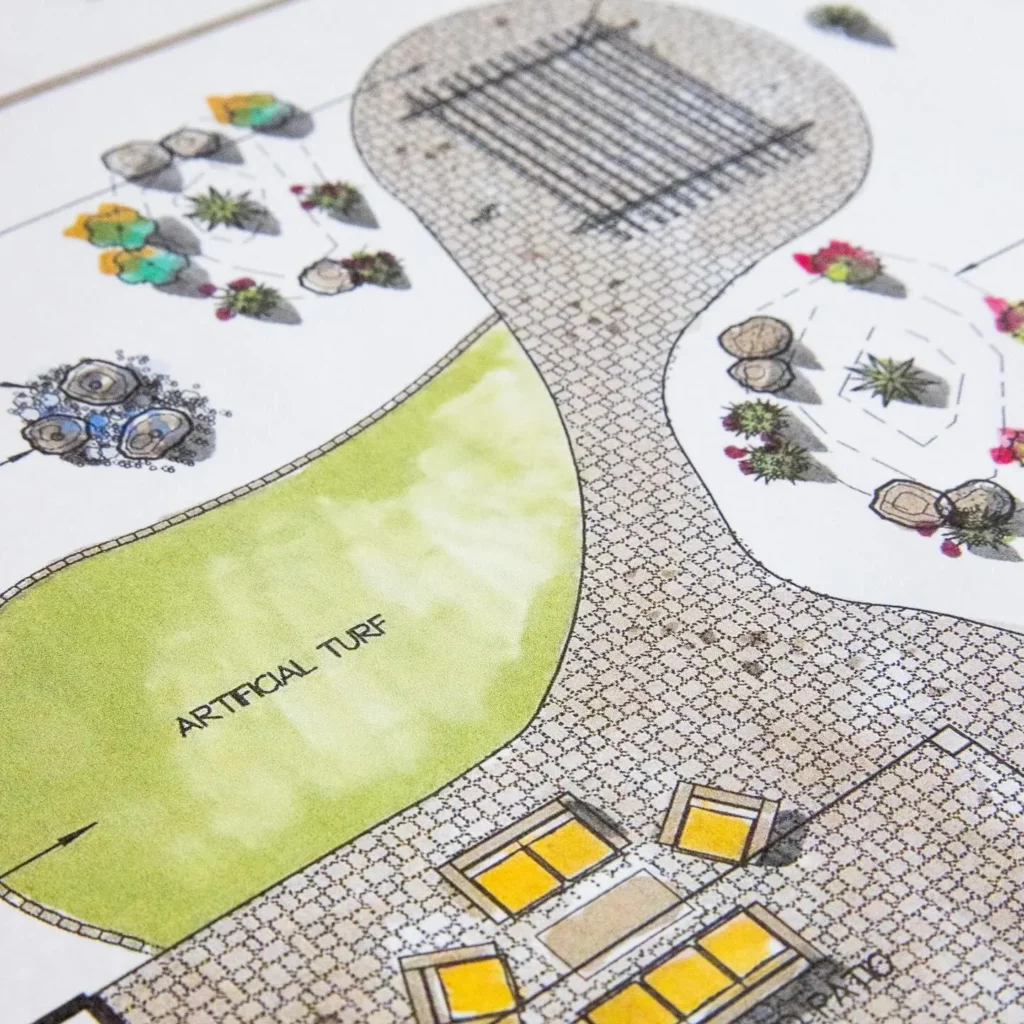
Technologies like drip systems and weather-based controllers boost water efficiency. Drip irrigation delivers water to roots, cutting evaporation and runoff. Yavapai Landscaping recommends these systems to keep plants healthy with less waste.
Smart controllers that use local weather data or soil moisture sensors can automatically adjust run times, reducing overwatering during cooler or wetter periods. Properly designed drip lines, pressure regulation, and emitter spacing ensure even distribution and reduce the need for frequent adjustments.
Advanced methods such as subsurface drip irrigation can deliver significant water savings and improved efficiency.
Subsurface Drip Irrigation for Water-Saving Landscaping
Subsurface drip irrigation is a water-saving technology known for high efficiency, reduced evaporation and drainage, and improved irrigation productivity. Its automation also cuts labor and operational costs, making it valuable in water-scarce areas.
Water saving potential and mechanisms of subsurface drip irrigation: A review, Y SHEN, 2021
In practice, Yavapai Landscaping pairs irrigation hardware with landscape design: grouping plants with similar water needs, installing appropriate filter and pressure regulation components, and setting seasonal programs. They also recommend routine audits to check uniformity and adjust emitters or zones as plants establish and grow.
How Does Yavapai Landscaping Manage Pest and Disease Problems Effectively?
Controlling pests and disease is key to healthy landscapes. Yavapai Landscaping uses integrated pest management (IPM)—focused on prevention, monitoring, and targeted control—to keep plants vigorous and reduce environmental impact.
IPM starts with cultural practices: choosing resistant varieties, maintaining plant health through proper watering and nutrition, and using sanitation to remove diseased material. Monitoring and early intervention prevent small issues from becoming large infestations, and targeted treatments minimize non-target impacts.
What Are Common Signs of Pest Damage in Prescott Landscaping?
Look for discolored leaves, holes in foliage, and visible insects. Early detection matters. Yavapai Landscaping offers assessments to identify pests and recommend the right treatments to restore plant health.
Other signs include unexplained branch dieback, sticky residues (honeydew), wilting despite adequate water, or localized damage patterns that point to chewing or sap-sucking insects. Yavapai Landscaping documents symptoms, compares them to seasonal expectations, and advises on immediate steps to limit spread.
Which Integrated Pest Management Strategies Does Yavapai Landscaping Use?
Yavapai Landscaping applies IPM tactics like biological control, cultural practices, and targeted pesticide use when needed. They promote beneficial insects and prefer organic options where effective, balancing control with ecosystem health.
Common IPM actions include monitoring with traps or visual inspections, introducing or encouraging beneficial predators, using physical barriers, and applying targeted, lowest-risk chemical controls only when thresholds are exceeded. The team emphasizes record-keeping so treatments and outcomes are tracked and adjusted over time.
Research supports the effectiveness of integrated pest management, especially in dryland environments.
Integrated Pest Management for Dryland Landscaping
Over a thousand insect species affect dryland cropping systems, and their adaptations make control challenging. When applied strategically, integrated pest management can address pest problems while lowering risks to people and the environment. Key components include pest identification, monitoring, host plant resistance, ecological engineering of dryland systems, and biological control.
Insect-pests in dryland agriculture and their integrated management, A Nawaz, 2017
When practical, Yavapai Landscaping recommends simple, non-chemical controls first: pruning out infested tissue, improving airflow through plantings, and adjusting irrigation to avoid overly humid microclimates that can favor disease. For ongoing issues, they develop an IPM plan tailored to the site that includes thresholds for treatment and options for follow-up monitoring.
How Can Soil Erosion and Drainage Issues Be Prevented and Controlled?
Soil erosion and poor drainage harm landscape health and stability. Yavapai Landscaping offers practical solutions to prevent erosion and manage water so properties remain stable and attractive.
Studies indicate that effective erosion control can reduce soil loss by up to 90%, preserving topsoil and preventing costly landscape damage. Yavapai Landscaping integrates these proven methods to protect properties.
Preventing erosion begins with understanding slope, soil type, and drainage patterns. Solutions pair soft engineering—plants and mulches—with hard engineering where needed, such as terraces, rock features, or retaining structures. These measures stabilize soil and create functional outdoor spaces that integrate with the site’s natural contours.
What Causes Soil Erosion in Northern Arizona Landscapes?
Erosion in Northern Arizona stems from heavy rainfall, wind, and sparse vegetation, which can strip away topsoil vital for plants. Yavapai Landscaping uses ground cover, retaining walls, and other measures to stabilise soil and reduce erosion.
Fragile soils become more vulnerable when vegetation is removed or when runoff concentrates down slopes. The firm recommends maintaining continuous vegetative cover where possible, protecting bare soil with mulch or erosion-control fabrics during establishment, and routing stormwater so it spreads out instead of focusing into channels that cut into the landscape.
Which Drainage Solutions Does Yavapai Landscaping Implement to Protect Properties?
Yavapai Landscaping installs drainage swales, French drains, and corrects grading to direct water away from structures. Proper water management prevents pooling, flooding, and soil loss, keeping landscapes healthy.
Practical drainage solutions often include regrading low spots, creating gentle swales with rock-lined bottoms to slow flow, using permeable paving to reduce runoff, and adding collection features that divert excess water safely. When hardscape elements are present, flashing and proper slope away from foundations are part of the solution set.
The company also considers long-term maintenance and access: drainage features are designed to be inspectable and serviceable so sediment buildup or blockages can be removed before they cause failure.
What Are Best Practices for Irrigation System Maintenance and Repair?
Regular irrigation maintenance keeps systems efficient and extends their life. Yavapai Landscaping stresses routine checks and timely repairs to avoid failures and conserve water.
According to industry data, well-maintained irrigation systems can reduce water waste by up to 30%, highlighting the importance of regular upkeep.
A typical maintenance program includes seasonal startup checks, mid-season audits to verify uniform coverage, and end-of-season winterising where required. These visits identify leaks, worn components, and alignment issues before they harm plants or waste water.
How Does Regular Irrigation Maintenance Prevent System Failures?
Routine checks catch leaks, clogs, and malfunctioning parts early. Fixing issues promptly prevents costly repairs and keeps systems running efficiently. Yavapai Landscaping provides maintenance to keep irrigation in good working order.
Maintenance tasks include inspecting controller schedules, testing sensors and rain shutoffs, cleaning or replacing clogged emitters and filters, checking pressure regulation, and confirming that zone run times match plant needs. Regular documentation of run times and observed plant condition helps the team fine-tune schedules seasonally.
What Troubleshooting Steps Does Yavapai Landscaping Follow for Irrigation Repairs?
For repairs, Yavapai Landscaping inspects visible damage, tests water pressure, and checks timers and controllers. Identifying the root cause lets them apply the right fix so watering continues without interruption.
Typical troubleshooting follows a clear sequence: confirm controller settings and power, inspect visible piping and fittings for leaks or breaks, run each zone to observe spray patterns and pressure, and test valves and wiring if zones do not activate correctly. When appropriate, the team isolates problem areas and replaces faulty components with correctly sized parts to restore reliable operation.
The company also advises homeowners on seasonal adjustments—reducing run times when plants are dormant, increasing in hot spells, and pausing for rainy periods—to match irrigation to actual need and avoid overwatering.
Why Choose Yavapai Landscaping for Personalized and Sustainable Landscape Solutions?
Choosing the right landscaper matters for personalised, sustainable outdoor spaces. Yavapai Landscaping combines eco-friendly practices with local expertise to deliver tailored solutions that meet each client’s needs.
The firm emphasizes practical design decisions that reduce long-term inputs—water, labor, and chemicals—while creating landscapes that suit the homeowner’s style. Their local experience helps them anticipate seasonal challenges and recommend plant palettes and materials that perform well in Prescott’s climate.
How Does Local Climate Expertise Enhance Landscaping Outcomes?
The team knows Prescott’s climate and selects plants and design approaches that thrive locally. That knowledge leads to landscapes that are attractive, sustainable, and resilient.
Local expertise also means understanding municipal codes, common pest windows, and the performance of soils and materials over time. Yavapai Landscaping leverages that knowledge to avoid common pitfalls and to recommend practical maintenance calendars that align with local seasonal patterns.
What Customer Service and Consultation Processes Ensure Quality Workmanship?
Yavapai Landscaping focuses on clear communication and thorough consultations. They assess client needs, provide detailed proposals, and keep clients informed throughout the project to ensure quality results.
A typical engagement begins with a site visit and needs assessment, followed by a written proposal that outlines scope, materials, and an estimated timeline. During construction, the team maintains communication on progress and any necessary adjustments. After project completion, they often provide a walkthrough and recommendations for routine care so the investment performs well over time.
How Can Homeowners Request Quotes and Consultations for Landscaping Projects?
Requesting a quote or consultation is simple with Yavapai Landscaping. Reach out to discuss your project and get a personalised assessment.
To prepare for a consultation, collect basic site information—property dimensions, photos of existing conditions, a list of priorities, and any known constraints such as easements or underground utilities. Having a sense of your budget and aesthetic preferences helps the team tailor recommendations and present realistic options.
What Information Should Clients Prepare for Effective Project Assessments?
Have details ready about property size, existing landscaping, and your goals. That information helps Yavapai Landscaping give accurate quotes and tailored recommendations.
If available, provide utility locations, HOA requirements, and any past maintenance records. These details save time during the assessment and improve the accuracy of the proposal, resulting in a smoother design and implementation process.
Which Contact Methods and Scheduling Options Are Available?
Yavapai Landscaping can be contacted by phone or email, and consultations can be scheduled to suit your availability. This flexibility makes it easier to move projects forward.
During busy seasons, expect some lead time for initial visits; the company will typically confirm an appointment window and follow up with a summary of observations and next steps after the visit. For ongoing maintenance contracts, they provide scheduling options that fit homeowner preferences and seasonal needs.
What Recent Case Studies Demonstrate Yavapai Landscaping’s Success in Resolving Common Issues?
Yavapai Landscaping has a record of solving common landscaping problems using practical, effective solutions. Recent case studies showcase their work in fire-safe landscaping, water conservation, and pest control.
Case studies typically describe the initial challenge, the implemented solution, and the resulting outcomes. For example, a fire-safety project might combine plant removal, strategic replanting, and installation of hardscape defensible zones; a water-conservation retrofit could include switching to drip irrigation, re-zoning plant beds, and installing a smart controller to reduce annual water use.
How Have Fire-Safe Landscaping Projects Reduced Wildfire Risks Locally?
Recent fire-safe projects show measurable reductions in wildfire risk for local properties. Through targeted vegetation management and fire-resistant planting, Yavapai Landscaping helped homeowners create defensible space that protects homes and boosts community resilience.
These projects often have a visible before-and-after effect: improved sight lines to the home for emergency access, reduced ladder fuels near structures, and aesthetically balanced plantings that maintain privacy without creating continuous combustible stretches. Homeowners typically receive a plan for ongoing maintenance to keep the improvements effective over time.
What Water Conservation Improvements Have Clients Experienced?
Clients report substantial water savings after adopting Yavapai Landscaping’s recommendations. Using drought-tolerant plants and smart irrigation led to lower water use and reduced utility bills, demonstrating the value of sustainable practices in Central Arizona.
Many clients also appreciate the reduced maintenance burden: well-planned waterwise landscapes often require fewer seasonal interventions and less frequent irrigation adjustments once mature. The firm documents seasonal programs and provides guidance on tracking water use so homeowners can see the difference in consumption and costs.
To enhance your outdoor space, consider seasonal lighting options to create a festive, inviting atmosphere.
See examples of our work and stay connected with Yavapai Landscaping on our Facebook page.
Frequently Asked Questions
What are the benefits of using native plants in landscaping?
Native plants suit the local climate and soils, so they need less water and fewer chemicals than non-native species. They also support local wildlife and pollinators. Using native plants creates low-maintenance, resilient landscapes that help biodiversity.
In addition to lower irrigation demand, native plantings often establish deeper root systems that help with erosion control and soil structure. They also tend to be well-adapted to local seasonal timing, reducing the need for frequent replacements.
How can homeowners improve soil health for better landscaping results?
Improve soil by adding organic matter, such as compost or well-rotted manure, to boost nutrient levels and structure. Test soil to find deficiencies and make informed amendments. Practices such as cover cropping and sensible plant rotation help maintain soil life and support healthy plant growth.
Practical steps include aerating compacted areas, adding coarse organic matter to improve drainage in heavy soils, and using mulch to conserve moisture and moderate soil temperature. Regular soil testing helps refine fertilisation and amendment strategies without over-applying inputs.
What role does landscape design play in pest management?
Thoughtful design can deter pests and encourage beneficial organisms. Grouping pest-repellent plants, adding species diversity, and allowing proper spacing and airflow reduce pest pressure and disease. These design choices lower reliance on chemical treatments.
Design that anticipates lifecycle timing—by placing vulnerable species away from known pest hotspots or by reducing overly dense plantings that trap moisture—also reduces pest incidence. Incorporating habitat for beneficial predators can create a more balanced, resilient landscape ecosystem.
How can homeowners assess their irrigation needs effectively?
Consider plant types, soil moisture, and local climate when planning irrigation. Use soil moisture tests and watch plant health to judge water needs. Smart controllers that adjust for weather can also optimise watering and reduce waste.
Start by mapping plant water-use categories and assigning separate irrigation zones for high-, moderate-, and low-water-use areas. Observe the landscapes after adjustments and use simple tools such as a soil probe or a moisture meter to confirm root-zone wetting without over-saturation.
What are the signs that a landscape requires professional intervention?
Signs include persistent pest problems, widespread plant die-off, poor drainage or standing water, and significant soil erosion. Stunted or discolored plants despite care also signal deeper issues. A professional can diagnose causes and recommend targeted solutions.
If problems recur after repeated home attempts to correct them, or if the issues affect large parts of the property or structural elements (foundations, retaining walls), it’s especially advisable to consult a trained landscaper for a comprehensive evaluation.
What are the advantages of using smart technology in landscaping?
Smart tech improves efficiency and conserves resources. Automated irrigation that uses real-time weather data, soil moisture sensors, and landscape management tools helps you water smarter, reduce waste, and simplify maintenance for healthier landscapes.
Beyond irrigation control, smart tools can include remote monitoring of irrigation performance, leak and valve-failure alerts, and data-driven scheduling that adjusts to seasonal plant needs. These capabilities reduce guesswork and help homeowners manage landscapes more proactively.
Conclusion
Yavapai Landscaping provides practical solutions to common landscaping challenges, improving both appearance and function. By addressing fire safety, water conservation, and pest management, they equip homeowners to make smarter choices. Contact them for a personalised consultation and take the next step toward a thriving landscape.
Whether you need a one-time assessment, a full redesign, or ongoing maintenance, thoughtful planning and regular care make a measurable difference in landscape performance and longevity. Working with a local, experienced team helps ensure the solutions are appropriate for Prescott’s environment and your goals.
Author: Mychael Parker