
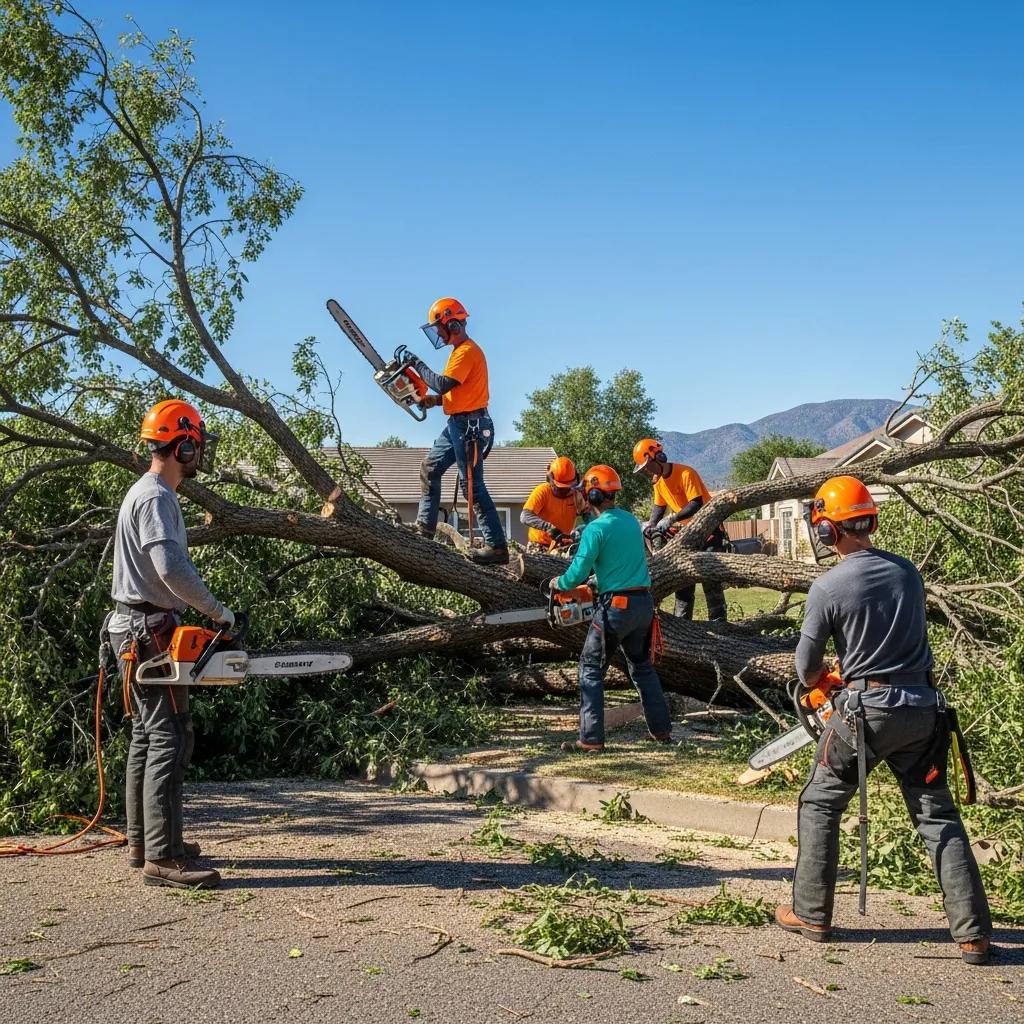
When storms strike or a tree becomes a hazard, you need a prompt, safety-first response. Our 24/7 emergency tree service means an on-call crew that triages calls, secures hazards, and performs prioritized removal and cleanup any time of day. This guide walks Prescott and Yavapai County homeowners and property managers through how emergency response works here — from on-site risk checks and sectional removals to stump grinding and simple Firewise steps you can use to reduce future risk. You’ll learn how pros assess structural danger, the techniques used to lower large limbs safely, and the steps to protect people and property while you wait for trained crews to arrive.
Local experience, continuous availability, and a safety-first approach matter in an emergency. Yavapai Landscaping serves Prescott, Prescott Valley, Chino Valley, and nearby Yavapai County communities with a dedicated 24/7 Emergency Tree Service focused on storm damage, fallen and hazardous tree removal, and emergency stump work. We offer free consultations so you understand your options before work begins. Below are the main reasons property owners choose a local, trained crew instead of ad-hoc help after severe weather.
The short list below explains the important advantages of hiring a qualified local emergency tree team.
Working with technicians who know local hazards and codes cuts delays and helps coordinate with utilities or first responders when needed — which improves outcomes and gives homeowners confidence.
We handle emergencies by triaging each incoming call, dispatching the right crew, and following a checklist-driven safety protocol that puts life-safety first. Triage flags immediate dangers — downed power lines, blocked exits, or trees leaning on structures — so crews can secure the site before cutting begins. Teams use clear radio and phone communication, certified rigging methods, and protective gear to keep falling debris from causing more harm during sectional dismantling. Typical tools include chainsaws, chippers, cranes or bucket trucks when needed, and traffic-control gear to keep the work zone safe. A tight timeline — intake, triage, dispatch, secure the site, phased removal — keeps work efficient while minimizing property impact.
This operational approach ties directly to how leadership and first-responder experience steer safety and on-site decisions.
Nathan Green, Yavapai Landscaping’s owner, is a retired firefighter who brings a first-responder mindset to emergency tree work. That background shapes how our teams prioritize life-safety, coordinate with utilities and emergency services, and manage incidents with calm, disciplined action. Under Nathan’s leadership we use structured assessment checklists, keep property owners informed, and document site conditions to support both safety and insurance needs. That mix of firefighting experience and local know-how helps homeowners get decisive, reliable help during storms and tree emergencies.
Next, we outline the step-by-step field process our crews follow when you call for 24/7 emergency help.
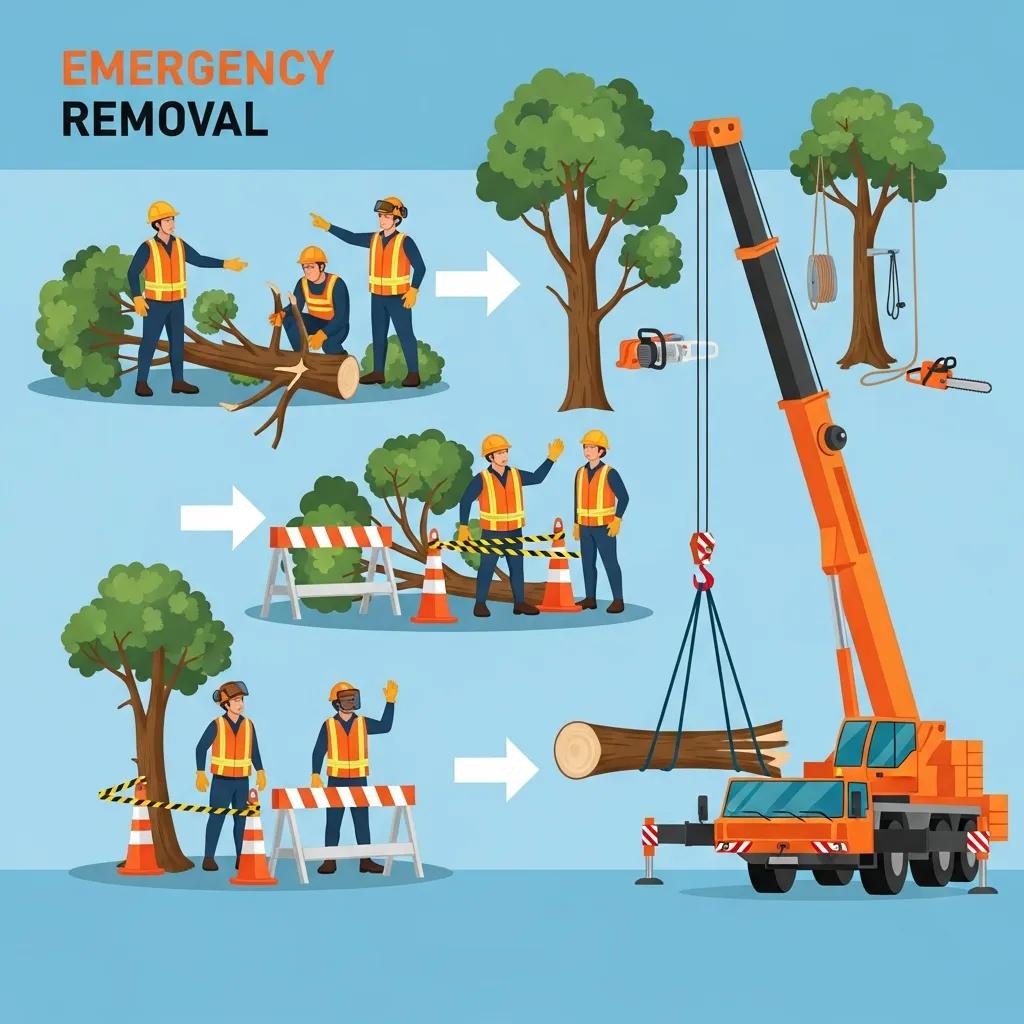
Emergency tree work follows a prioritized sequence designed to stabilize hazards, protect people, and restore safe conditions quickly. The core stages move from initial contact to assessment, site securement, safe removal, debris handling, and final checks and documentation. Crews separate life-safety tasks from property-focused work and use techniques like sectional dismantling, crane-assisted lifts, or controlled lowering when structures are nearby. We document each phase to help with insurance and future mitigation. Below is a concise, numbered outline so homeowners know what to expect and how to cooperate.
These steps help everyone stay safe and informed; crews usually document each phase to support insurance claims and follow-up work.
Below is a quick reference table explaining response timing and typical crew actions at each stage.
| Stage | Typical Response | What the Crew Does |
|---|---|---|
| Initial Call | On-call triage within minutes | Collects location and hazard details, dispatches nearest qualified crew |
| On-site Assessment | Arrival within local availability windows | Performs safety checklist, identifies utilities and structural risks |
| Secure & Stabilize | Immediate actions on arrival | Sets perimeter, installs bracing/rigging, notifies utilities if required |
| Removal & Cleanup | Same-day phased work when feasible | Sectional dismantling, chipping, hauling, initial stump treatment |
A structured response reduces uncertainty and speeds resolution, helping homeowners prioritize safety while crews do the work.
Yavapai Landscaping keeps crews on call and offers rapid callbacks for immediate assessments and free consultations. Homeowners across Prescott-area communities can request emergency service and guidance any time; we document site conditions for insurance or follow-up work when requested. That local, on-call capability complements the procedural steps above and gives property owners clear next steps after a tree emergency.
Effective storm response depends on pre-arranged plans and coordinated action — a point emphasized in urban forestry guidance.
Rapid Emergency Tree Removal & Storm Response Planning
“Rapid removal is often needed to let emergency vehicles move through the city. City foresters must be able to call on utilities, private arborists, and neighboring crews. Because quick response is essential after storms, a pre-arranged emergency plan is vital.”
Emergency tree services cover situations where waiting increases risk to people or property: storm-damaged trees, fallen trees blocking roads, leaning trees near structures, and urgent stump hazards during cleanup. Each scenario needs a different mix of stabilization, removal technique, and disposal planning. Our crews prioritize life-safety and access restoration before non-critical cleanup. Yavapai Landscaping routinely handles storm damage removal, fallen and hazardous tree removal, emergency stump work, and general emergency tree care 24/7 across Prescott, Prescott Valley, and Chino Valley. Knowing the category of your problem helps you decide whether to call an emergency crew or schedule routine service.
Here are common emergency situations and practical steps homeowners should take while waiting for professional help.
Trained crews triage by life-safety risk first and property restoration second, which helps us get the most urgent dangers handled quickly.
| Emergency Situation | Typical Risks | Our Approach |
|---|---|---|
| Storm-damaged tree | Falling limbs, damaged roots | Immediate site securement, sectional removal, debris hauling |
| Fallen tree on driveway/road | Blocked access, secondary hazards | Prioritize access restoration, coordinate traffic control |
| Leaning tree near structure | Structural impact, sudden collapse | Stabilize, brace, or remove depending on the risk assessment |
| Hazardous stump/roots | Trip hazards, equipment damage | Emergency stump grinding or marked exclusion until full removal |
Yavapai Landscaping handles these emergencies around the clock and can provide immediate assessments and free consultations — request an emergency evaluation to get a prompt plan and cost estimate.
Cleanup starts with a life-safety check, then we establish access and sequence removals to avoid further collapse or damage. Crews clear paths for emergency vehicles and homeowners first, then remove suspended or unstable limbs that threaten collapse. Debris handling usually includes on-site chipping for small material, staged pile removal for larger logs, and hauling to approved disposal sites. Timelines depend on volume and safety complexity. When power lines are involved, we coordinate with utilities before cutting. Our sequence — secure, remove, then clean — minimizes secondary damage and speeds recovery.
Expect prioritized work focused on safety and access within hours, with more complete cleanup over following days depending on volume, permits, and utility coordination. We document progress to support insurance claims.
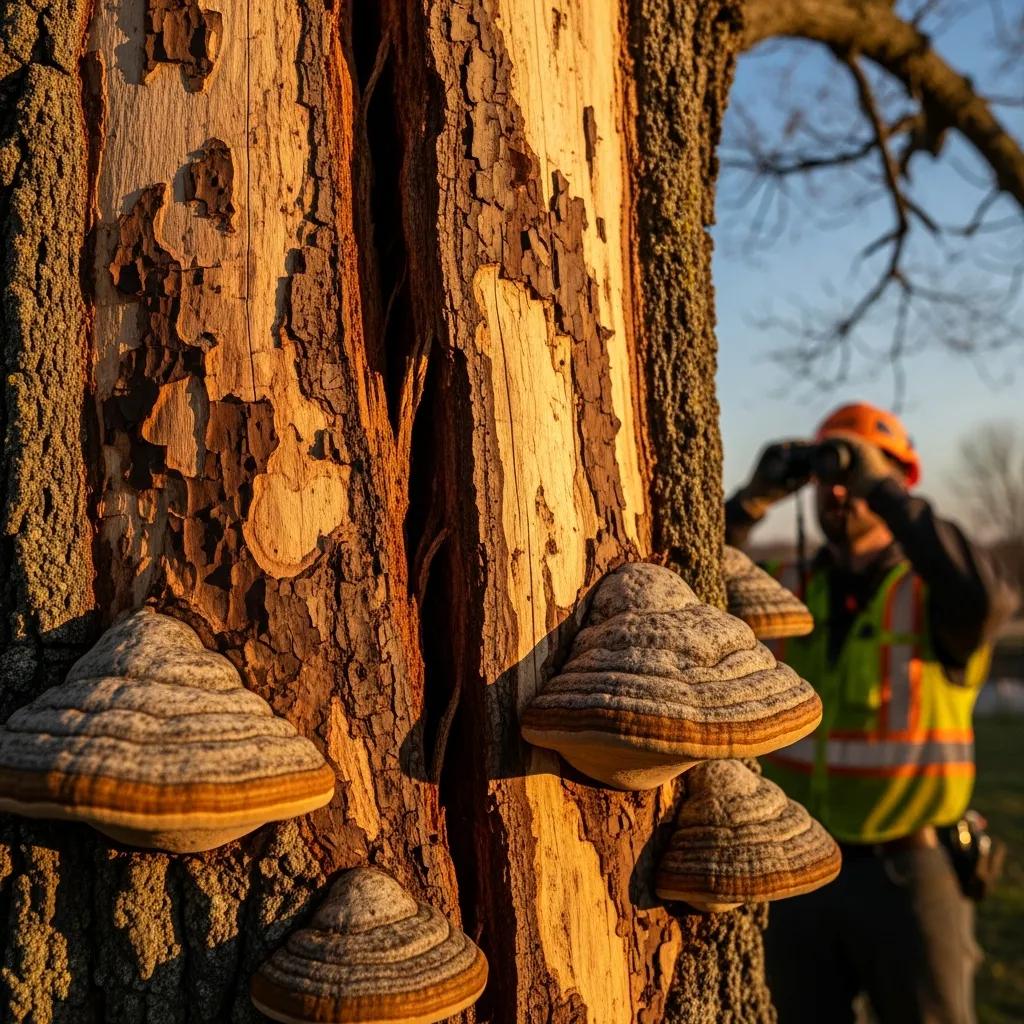
Look for large structural cracks, trunk rot, sudden or severe lean, canopy dieback, or mushroom/fungal growth at the base — these are common signs a tree may fail. The immediate step is a professional risk assessment, followed by stabilization or removal. Mitigation can include targeted pruning to reduce weight, temporary bracing, or full sectional removal when collapse is imminent. Regular inspections and corrective pruning lower the chance of future emergency removals. If a tree threatens life, vehicles, or structures, call an emergency crew — early action prevents worse outcomes.
Systematic tree risk assessment is essential for preventing property damage and protecting public safety, as arboriculture research shows.
Tree Risk Assessment for Property & Public Safety
“Where there is a potential target, tree failures can damage property, disrupt services, or threaten public safety. Several qualitative methods exist worldwide to give a systematic approach to tree risk assessment and management.”
Spotting risks early and coordinating with a qualified emergency team lets homeowners turn an uncertain hazard into a managed removal, limiting damage and protecting people.
Removing stumps quickly after an emergency removes trip hazards, cuts pest and disease risk, and frees space for restoration or replanting. Left in place, stumps can block access, complicate cleanup, and create safety problems for equipment. We offer grinding or full extraction depending on site constraints and urgency, and we can do stump work during cleanup or schedule it as a follow-up. The table below compares common stump options so you can choose quickly during recovery.
| Stump Option | Pros | Cons / When It’s Needed |
|---|---|---|
| Stump grinding | Fast removal of the visible hazard; allows immediate regrading | Leaves grindings on site; best when quick clearance is needed |
| Full stump excavation | Removes root mass completely and prevents regrowth | More invasive and slower; used when replanting or structures are affected |
| Delayed removal | Offers scheduling flexibility | Trip hazards remain and pest/disease risk persists |
For most emergency situations, grinding is the practical first step; excavation is reserved for cases that require complete root removal or site redevelopment.
Grinding eliminates trip hazards and reduces habitat for insects and fungal pathogens that can spread to other plants. It clears space quickly so you can resume mowing, landscaping, or construction. Delaying stump removal creates hidden hazards for people and equipment as roots decay unpredictably. When you need rapid site restoration after a storm or fall, emergency stump grinding is an efficient, cost-effective option. Homeowners should weigh the immediate safety and usability benefits of grinding against excavation when long-term mitigation is required.
Next, a quick overview of the equipment we use and why each item matters for emergency stump work.
We select compact and heavy equipment based on access, stump size, and site safety. Common tools include mobile stump grinders, mini-excavators for partial extractions, chippers for debris, and load-haul gear for large removals. Grinders reduce stumps to mulch for quick regrading; excavators let us remove rootballs when needed. Crews always use barricades, PPE, and safe operating practices to protect bystanders during grinding. Choosing the right machines speeds the job and reduces damage to turf and hardscapes. In many emergencies, small, agile grinders offer the fastest way to restore safe, usable space with minimal disturbance.
Firewise practices blend wildfire-risk reduction with emergency response, making landscapes safer now and more resilient over time. Creating defensible space and removing ladder fuels reduce the chance wildfire will reach structures; crown thinning and selective removals improve access and lower ember risk. When emergency crews apply Firewise principles during cleanup, reactive work also reduces future hazard. That means immediate removals can double as mitigation, helping homeowners lower long-term risk and the likelihood of repeat emergency calls.
Below are simple defensible-space zones and clearance tips homeowners can use after an emergency.
When crews apply Firewise criteria during emergency removals, homeowners get immediate hazard reduction plus a plan for ongoing maintenance that cuts future emergency risk.
Defensible space is managing vegetation around structures using zone-based fuel reduction so wildfire intensity near homes is lower and firefighters can defend properties more easily. It breaks fuel continuity with clearance and spacing guidelines, removes ladder fuels, prunes low limbs, and creates safer evacuation routes and equipment access. Regular maintenance keeps defensible space effective. Applying these steps after emergency removals turns reactive cleanup into proactive wildfire mitigation.
Firewise landscaping helps decide which trees and brush to remove and which to keep for shade or erosion control, balancing safety with landscape function. Typically we remove immediate hazards first, then move into planned mitigation that uses Firewise spacing, selective thinning, and replanting with lower-risk species. Regular inspections and scheduled fuel reduction prevent future emergencies. Coordinating emergency crews with Firewise planning makes cleanup investments serve long-term community resilience rather than being short-term fixes.
Combining emergency response with Firewise principles gives homeowners safer short-term outcomes and a path to fewer emergencies down the road.
Homeowners often ask when to call an emergency crew, what response times look like, and whether we document the job for insurance. Clear answers reduce hesitation and speed effective outcomes. The Q&A below gives quick, direct guidance on when to call, what crews do on arrival, and how we help with insurance documentation.
These short Q&A items are designed for quick reading when you need answers fast.
24-hour emergencytree removal is an on-call service that responds to urgent tree hazards where delay increases risk to people, property, or essential access. Typical scenarios include trees touching power lines, large limbs suspended over occupied spaces, fallen trees blocking driveways or roads, and trees that suddenly lean on structures after root failure. If you see any of these, evacuate the immediate area if safety is uncertain and call a professional — don’t try DIY removal. Trained crews reduce the chance of secondary damage and get your property back to safe conditions sooner.
Next, a note about how we support insurance documentation after emergencies.
Yes. We document hazards with photos, write clear estimates, and can prepare condition reports when homeowners ask. Having on-site documentation and a recommended scope of work helps when you speak with an adjuster and can speed claim decisions. Save photos, dates, and our assessment to strengthen your claim. Yavapai Landscaping offers free consultations and documented assessments homeowners can share with their insurers.
If you need immediate help or a free consult for an urgent tree hazard in Prescott, Prescott Valley, Chino Valley, or elsewhere in Yavapai County, contact Yavapai Landscaping for on-call assessment and emergency scheduling.
This guide has laid out operational, practical, and preventive aspects of emergency tree services so you can make informed, timely decisions when hazards appear.
Put safety first. Move people away from the fallen tree, especially if it’s near power lines or buildings. Call a professional emergency tree service — do not try to move heavy limbs yourself. Our crew will secure the area, assess the risks, and remove the tree safely while documenting the incident for insurance.
Regular maintenance and inspections reduce emergency risk. Schedule yearly checks with a certified arborist to spot dead branches, root problems, or disease. Prune as needed, remove hazardous trees, and create defensible space around your home. Knowing local species and their storm vulnerabilities also helps you plan preventative work.
Costs vary by tree size, location, and complexity. Emergency jobs commonly range widely — smaller, simple removals cost much less than large, complicated ones. Additional charges may apply for stump removal, hauling, or follow-up work. Always request a written estimate so you understand the scope and costs before work begins.
Look for 24/7 availability, local experience, a strong safety record, and clear documentation practices. Check for insurance, certifications, and customer reviews. A reputable company offers clear communication, free assessments, and written estimates to help you make informed choices during an emergency.
Crews use chainsaws for cutting, stump grinders for quick stump work, chippers for branches, and cranes or bucket trucks for large or high trees. Safety gear — helmets, harnesses, and protective clothing — is always used. Equipment choice depends on tree size, location, and surrounding hazards.
Expect a structured, safety-focused approach: an initial assessment, perimeter control, phased removal starting with the most dangerous sections, debris cleanup, and documentation for insurance. Good communication from the crew helps you stay informed throughout the job.
Yes. We assess ecological impacts, especially for trees that support wildlife. Crews take care to minimize damage to nearby vegetation and soil and can recommend native species for replanting. Sustainable practices help replacement landscaping support the local ecosystem.
Choosing a dependable 24/7 emergency tree service in Prescott gets hazards handled quickly and safely. Our trained crews focus on life-safety, clear communication, and efficient removal techniques so homeowners can trust that urgent needs are met with care. Yavapai Landscaping is ready to help — for immediate assistance or a free consultation, contact us now.