
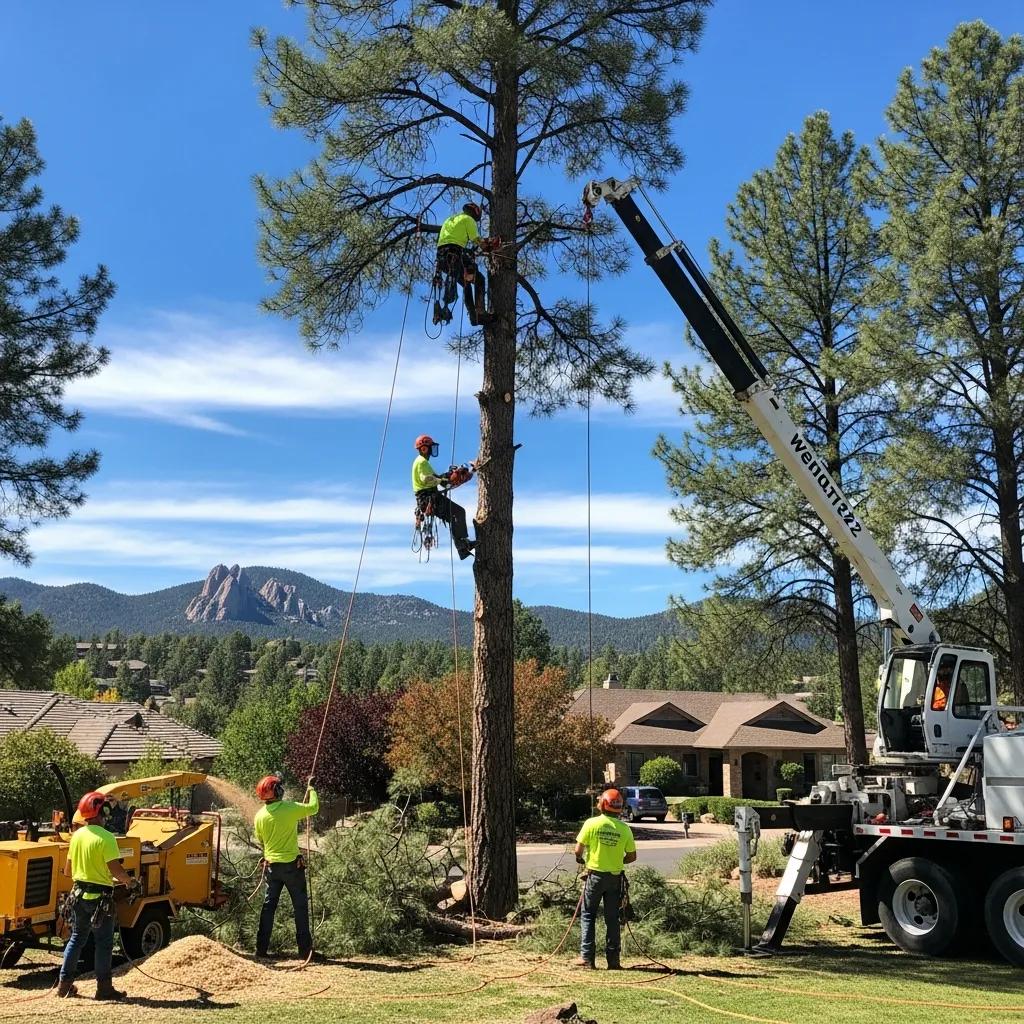
Removing trees in Prescott takes experienced crews, the right equipment, and local know‑how to protect your property while restoring safety and curb appeal. This guide walks through how professional tree removal works, why certified teams make a difference, and how common services — from hazardous removals to stump grinding — address the risks Prescott homeowners face. You’ll also find what drives removal costs in Prescott, when to call for emergency service, and how permits plus FireWise defensible‑space practices affect planning. Each section explains the process, practical benefits, and next steps so you can decide whether to hire a pro. We also describe the services Yavapai Landscaping offers, our free estimate options, and how safety protocols and local experience improve outcomes across Yavapai County.
Professional tree removal is a planned, controlled process: crews assess hazards, build an execution plan, and use specialized equipment to remove a tree while protecting people, structures, and utilities. That plan accounts for species, crown form, root stability, and site limitations; the result is less property damage, reduced liability, and faster cleanup. Here in Prescott, native pines, junipers, and seasonal winds raise wildfire and storm risks, which makes professional oversight especially important. Knowing these local drivers explains why a trained arborist or crew is a safer choice than a DIY attempt.
Hiring professionals also speeds work and keeps you compliant with local regulations, protecting your property value and avoiding fines. Below we compare common amateur hazards with professional advantages to help homeowners decide when a DIY approach is not worth the risk.
Professional removal delivers clear advantages:
These benefits address the most common DIY pitfalls and are explained in the next section.
DIY tree removal often creates avoidable hazards: falls, improper cuts that destabilize remaining wood, and collisions with buildings or power lines. Safe removal requires load calculations, correct rigging, and staged sectional work; without those techniques the chance of injury or costly damage rises quickly. Professionals reduce that risk through training, the use of cranes or boom trucks when needed, and insurance that covers people and property. In Prescott, steep lots and dense species can make access difficult, so mistakes often cost more than hiring a qualified crew.
When NOT to DIY is straightforward: trees close to structures or utilities, storm‑damaged trunks, rotten root plates, and large‑diameter specimens should all be handled by pros. Spotting these scenarios leads naturally to why local Prescott expertise matters for safety and scheduling.
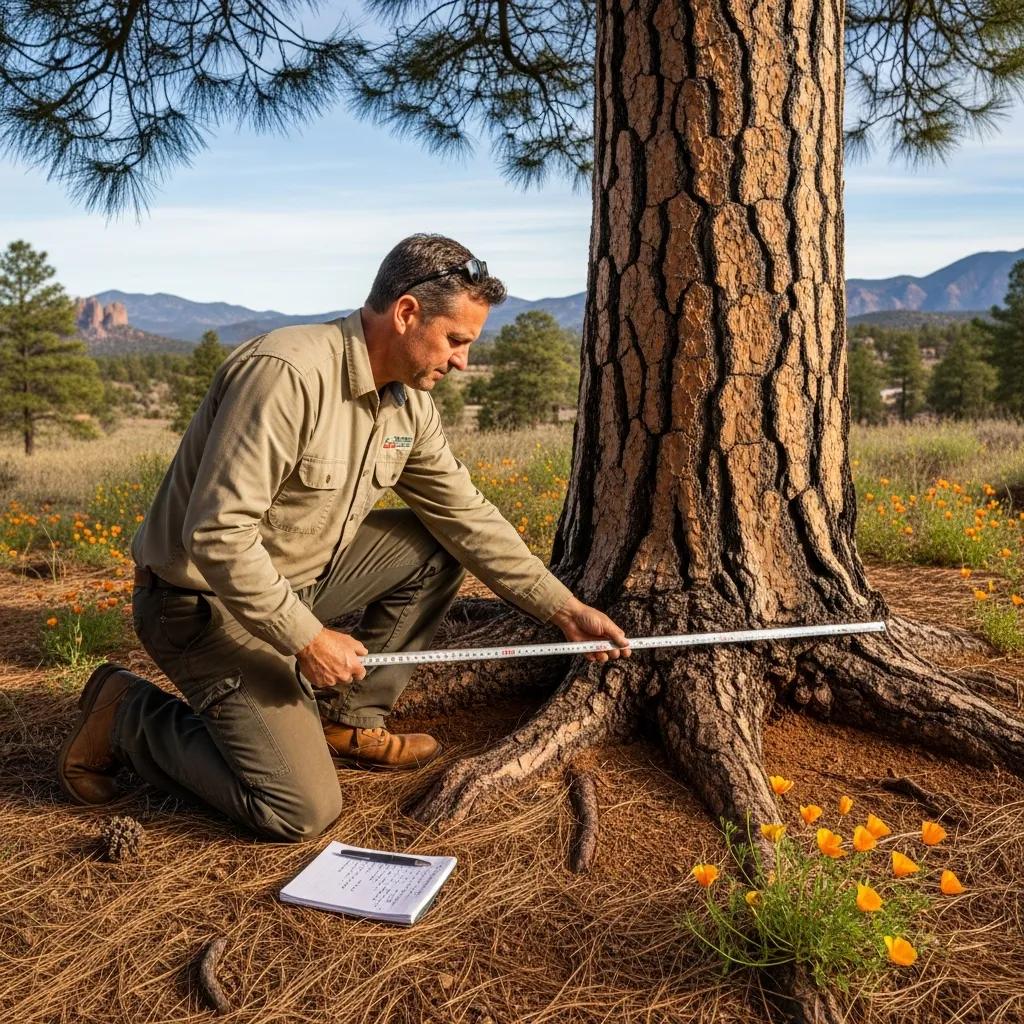
Local experience lets crews match removal methods to Prescott’s species, terrain, and wildfire concerns. Arborists who know pine, juniper, and oak root systems can predict likely failure modes and choose safer techniques. They also apply FireWise defensible‑space practices to reduce ignition risk around homes. Terrain—slopes, rock outcrops, and tight access—drives whether crews use sectional lowering, crane assistance, or staged rigging to protect neighbors and property. Local teams also schedule work to avoid peak storm seasons and coordinate with utility providers when lines are nearby.
Creating and maintaining defensible space is a key part of wildfire mitigation — and it’s often simpler than people expect.
Understanding Defensible Space for FireWise Properties
Defensible space is essentially a well‑maintained, watered yard. Even a healthy lawn can serve as an effective defensible space.
What is defensible space, 2003
That local, species‑specific knowledge shortens timelines and reduces surprises during work. The practical result: safer, faster removals that leave a site ready for replanting or other landscaping while minimizing long‑term issues from roots and debris.
Comprehensive tree removal covers the full project lifecycle: inspection and risk assessment, permitting and planning, sectional or crane‑assisted removal, stump grinding or excavation, debris hauling, and site restoration. We start with an on‑site evaluation to document hazards and access, then create a staged removal plan that prioritizes safety and preserves any salvageable wood. The benefit is a single contractor managing the job from start to finish so you have one point of contact and clear expectations for timing and cost.
Below is a concise overview of the typical service categories offered by a full‑service provider like ours.
These categories set expectations for response times and equipment needs. The table below helps homeowners compare options quickly.
Different removal services require distinct equipment and planning.
| Service | Typical Response Time | Equipment Used |
|---|---|---|
| Emergency tree removal | 1–24 hours depending on severity | Chainsaws, chippers, cranes or boom trucks, rigging gear |
| Hazardous tree removal | 24–72 hours | Sectional rigging, cranes, ropes, stump grinders |
| Routine tree removal | 3–7 business days | Chainsaws, chippers, dump trucks, stump grinders |
This table clarifies how urgency maps to resources and helps you pick the right response level. The next section explains how hazardous removals are planned and executed to control risk.
After assessment and service selection, homeowners can request a free estimate and schedule work efficiently — see the cost section for details on estimate options.
Hazardous removals begin with a systematic hazard assessment that records structural defects, lean, cavity locations, and proximity to people or assets. That diagnosis informs a removal plan designed to avoid uncontrolled falls. We commonly use sectional removal with rigging or a crane to lower heavy limbs and trunk sections to designated drop zones. The benefit is precise control over where debris lands, protecting structures, utilities, and landscaping while speeding cleanup.
Typical steps include establishing exclusion zones, setting rigging anchors, progressive limb removal, and staged trunk cutting with continuous monitoring for unexpected movement. This procedural approach reduces rescue scenarios and prevents property damage — and it’s the same thinking you should follow when deciding whether to call for emergency assistance.
Call emergency tree removal when a tree creates an immediate hazard: it has fallen on a structure, blocks a critical access route, or is tangled with live power lines that risk electrocution or fire. The triage is straightforward: if life, property, or essential utilities are at risk, request an immediate professional response. Pros bring traffic control, utility coordination, and trained crews who secure the scene quickly.
While you wait, keep a safe distance, secure pets, and avoid moving debris that might destabilize remaining wood. These simple steps make the scene safer for responders and speed a smooth handoff to the emergency crew.
Stump grinding uses a rotating cutting wheel to reduce a stump below grade; full stump removal excavates the root ball and major roots. Grinding removes trip hazards, reduces insect and disease attractants, and prepares the area for replanting or hardscape work. Full removal is more disruptive but eliminates roots that could interfere with foundations or underground utilities. Both methods improve usability, appearance, and long‑term landscape health.
Many Prescott homeowners choose stump grinding to quickly reclaim lawn or garden space and to reduce pest habitat that can attract wood‑boring insects or pathogens. The table below compares the two approaches to help you decide.
Use this comparison to choose whether grinding or excavation best fits your project.
| Method | Characteristic | Typical Outcome |
|---|---|---|
| Stump Grinding | Removes stump to below grade, leaves shredded mulch | Quick site restoration, lower cost, residual roots decay over time |
| Full Stump Removal | Excavates root ball and major roots | Complete removal, suitable for construction, higher cost and time |
| Hybrid (grind + targeted excavation) | Grinds then removes major roots near structures | Balanced approach for aesthetics and structural needs |
Grinding is usually faster and less disruptive; full removal is preferred for construction or where roots threaten foundations. Once you’ve chosen a method, consider professional benefits outlined next.
Stump grinding reduces the stump below the soil surface with a rotating cutting wheel, leaving wood chips that can be reused as mulch. Full stump removal digs out the root system and root collar entirely, which requires excavation and hole restoration. Grinding is quicker and less expensive; removal is more thorough and better for sites planned for construction or heavy hardscapes.
Typical Prescott situations guide the choice: small residential yards usually benefit from grinding, while lots planned for major construction often need full removal. Knowing these trade‑offs helps you schedule work and set a realistic budget for post‑removal landscaping.
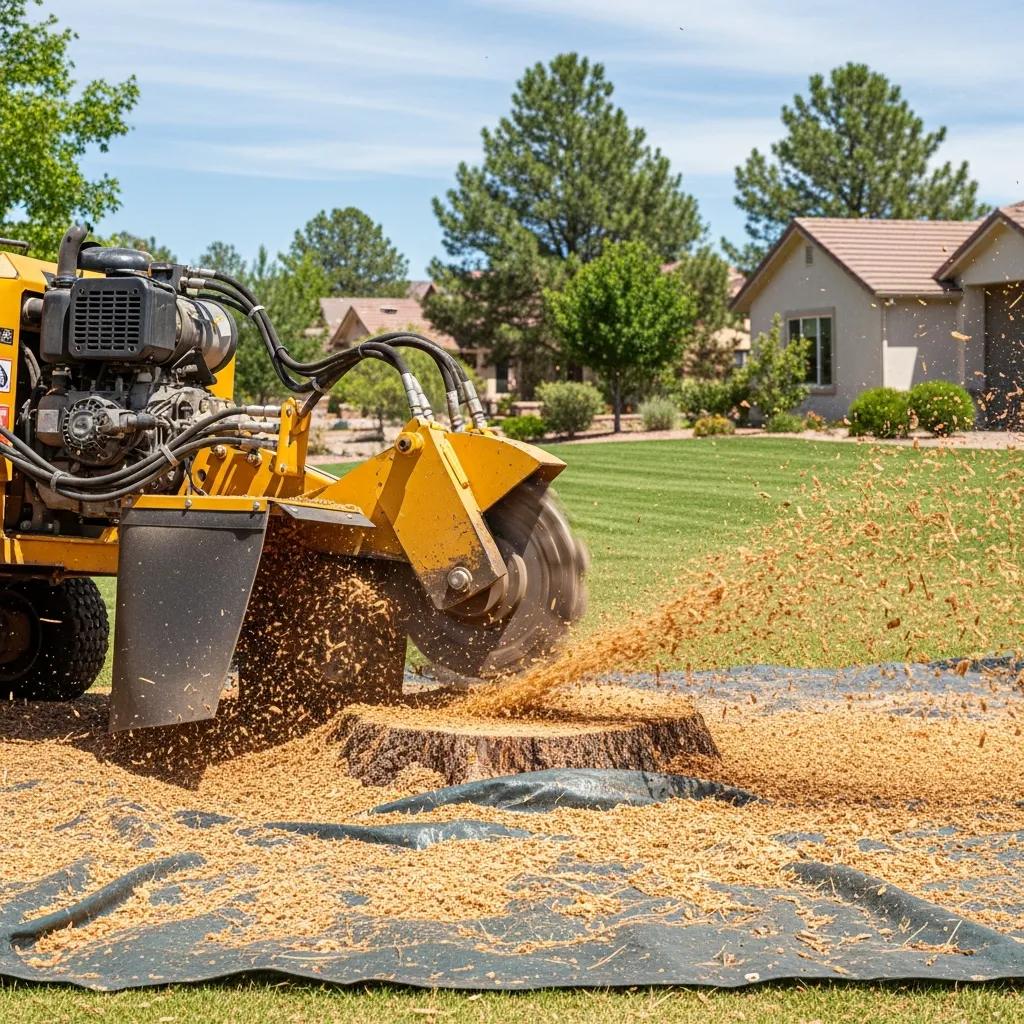
Professionals bring heavy‑duty grinders, debris management, and site‑grading skills that cut labor and time. The result is a cleaner finish — stumps ground uniformly below grade, chips removed or reused as mulch, and the site prepared for planting or lawn restoration. Benefits include lower injury risk, faster turnaround, and responsible disposal or reuse of wood chips.
Professional equipment makes the difference in efficient, thorough stump removal.
Efficient Stump Grinding: How Professional Equipment Works
A stump grinder quickly reduces a stump while tolerating limited small stones, metal, and mineral material in the soil.
Tree stump removal from landscapes, 2008
Our crews also evaluate root health and regrowth risk, recommending targeted excavation if roots threaten nearby structures. These professional steps reduce long‑term maintenance and speed the transition to your next landscaping project.
Tree removal cost in Prescott is driven by tree size, location and access, species and wood density, health condition, and required equipment — each factor raises labor, time, or specialty resources. The connection is simple: larger trees need more crew hours and heavier machinery, tight access increases rigging complexity, and dense or decayed wood slows cutting. Understanding these drivers helps you budget realistically and compare provider estimates.
Below is a clear breakdown that explains how each major factor affects price and why.
Cost drivers for tree removal explained:
| Factor | Cost Influence | Explanation |
|---|---|---|
| Tree Size (diameter/height) | High | Larger diameter and height increase crew size, lift equipment needs, and removal time |
| Location & Access | High | Limited yard access, proximity to structures, and slope require rigging or cranes |
| Species & Wood Density | Medium | Hardwoods and dense resinous wood increase cutting time and saw wear |
| Tree Health & Decay | Medium | Rotten trees may require more careful sectional removal and debris handling |
| Permits & Disposal | Low–Medium | Permit fees, stump grinding, and debris hauling add to total project costs |
This breakdown helps you parse estimates and understand why two quotes may differ. The following section shows how size, location, and species concretely affect pricing examples.
Diameter and height scale labor and equipment: a small ornamental tree often needs only a chainsaw crew, while a large oak or ponderosa pine may require boom trucks and multiple climbers. Location matters because crews may be able to stage equipment adjacent to the base or must haul tools through yards, increasing labor. Species affects cut time and rigging complexity; resinous conifers and deeply rooted trees often need heavier machinery.
For example: a small yard pine can often be removed with minimal disruption and modest cost, whereas a large oak next to a house typically requires sectional lowering, a larger crew, and a higher quote. Those dynamics explain why homeowners often ask for clear, itemized estimates — which Yavapai Landscaping provides in several formats explained below.
We offer free estimates tailored to homeowner needs: onsite inspections for complex sites and photo‑based virtual estimates for simpler jobs. Each option begins with an assessment — either in person or from homeowner photos — that identifies size, access, and permit triggers to create a transparent, itemized quote. The benefit is a no‑cost baseline that lets you compare scope, timeline, and optional services like stump grinding or brush removal.
To schedule a free estimate, call our office or visit us in person to request an inspection; typical turnaround for a written estimate is discussed when we schedule. Offering both onsite and virtual evaluations speeds decision‑making and aligns expectations before work begins.
Permits and regulations in Prescott are set by city planning, protected‑zone designations, and HOA covenants. Knowing common triggers helps you avoid fines and delays. In short: certain trees or locations — for example, those in open space, near heritage‑designated specimens, or within protected corridors — require formal review and permits. Confirming permit needs early smooths approvals and provides proper documentation for your property records.
Use this checklist to spot likely permit triggers and next steps when planning a removal.
This checklist helps you consult municipal planning or an experienced provider to confirm permit needs and next steps. The subsection that follows explains typical permit triggers and how to proceed.
A permit is usually required when a tree is designated protected or historic, when removal impacts public open space, or when work encroaches on city right‑of‑way or significant habitat. Determining permit necessity involves checking municipal criteria and any applicable HOA rules. Confirming permit status up front helps you avoid stop‑work orders and fines.
If you’re unsure about permits, request a professional assessment that includes documentation and recommended next steps; a local provider can often assist with permit applications and supply the technical details city planners require. That help makes the process smoother and keeps work compliant.
Following local ordinances means removals meet engineered safety standards, proper disposal procedures, and documented approvals that protect homeowners from legal and financial consequences. The process includes submitting plans, following approved methods, and keeping records that show due diligence. The payoff is reduced liability, clear documentation for insurance, and environmentally responsible disposal.
Professional providers frequently assist with paperwork and coordination, which streamlines permitting and helps ensure the job meets both regulatory and neighborhood standards.
At Yavapai Landscaping we focus on safety, local expertise, and customer‑first service to deliver reliable tree care for Prescott residents. Our approach combines trained crews, safety‑first protocols, and flexible response options — including 24/7 emergency service — so we can handle both urgent and planned needs. The benefit to customers is clear communication, safer execution, and one accountable point of contact from assessment through cleanup.
Our local offerings include hazardous tree removal, 24/7 emergency response, stump grinding, brush removal, FireWise services, and ongoing landscape maintenance. That range lets a single provider manage defensible‑space projects, emergency mitigations, and routine tree care for homes and businesses.
Key customer‑first practices we follow:
These practices build homeowner confidence and keep projects on track. The next subsection explains the crew qualifications and safety steps that support these claims.
Yavapai Landscaping staffs experienced, certified professionals who perform risk assessments, pruning, and removals using industry best practices. Our crews apply standard arboricultural techniques — structural pruning, hazard analysis, and sectional removal — so each action lowers future risk and supports tree health when preservation is possible. The benefit is predictable results and fewer surprises during the job.
Professional judgment and specialized training matter when evaluating tree risk — they’re the difference between a safe, effective plan and a costly mistake.
Arborist Expertise: Key to Professional Tree Risk Assessment
Professional judgment grows from training, field experience, and informed decision making. Research shows how arboricultural and risk‑assessment training improves assessor judgment and the overall tree risk method.
Professional expertise and its role in risk assessment, RW Klein, 2021
Certifications and affiliations vary, but our emphasis is on documented training and hands‑on experience applied to Prescott’s species and terrain. That combination gives homeowners reliable assessments and treatment recommendations that fit local environmental and safety standards.
Safety starts the moment we arrive: site inspection, hazard mitigation planning, PPE, and traffic or pedestrian control create a controlled work area. Local knowledge speeds work by anticipating species‑specific behavior, root patterns, and wildfire‑related clearance needs. Together, these practices reduce on‑site risk, shorten timelines, and protect surrounding landscaping.
Customers benefit from a methodical, documented approach that prioritizes safety, compliance, and clear communication — ensuring each removal or maintenance task is completed predictably and respectfully.
First, stay safe: keep people and pets well away from the area. Don’t try to move the tree yourself, especially if it’s contacting power lines. Call a professional tree removal company right away — they’ll assess the scene, secure it, and remove the tree safely while coordinating with utility companies if needed. Quick, professional action reduces further damage and risk.
Clear the area of obstacles like patio furniture, vehicles, and decorations. Keep children and pets inside and inform the crew about nearby hazards such as structures or power lines. Check if a permit is required for the work. Clear preparation helps the crew work efficiently and keeps your property safe.
Look for signs of advanced decay — hollow trunks, large cracks, or significant lean — which indicate compromised structure. Dead branches, visible root rot, and pest infestations are other red flags. If you see these symptoms, consult a certified arborist for a professional assessment and recommendation.
Weather matters: rain, snow, and high winds create unsafe conditions and complicate removal. Professionals monitor forecasts and typically schedule work on dry, calm days. Seasonal risks, like storm seasons, also influence timing — it’s often best to remove hazardous trees before severe weather arrives.
Trimming (pruning) selectively removes branches to improve health, structure, and appearance. Tree removal is the complete extraction of a tree at its base, usually for safety, disease, or damage reasons. Trimming is routine maintenance; removal is used when a tree is a hazard or no longer viable.
While removing a tree can seem counterintuitive environmentally, it can be beneficial in specific cases: removing dead or diseased trees prevents pest and disease spread, and clearing hazardous trees reduces wildfire risk. Responsible removals also create space for healthier, better‑suited plantings that improve long‑term landscape resilience.
Expect a methodical process: the crew will assess the site, identify hazards, and plan the removal. They’ll establish safety zones and use specialized equipment to lower debris in stages. After the tree is down, crews typically clean up the area and can provide stump grinding or haul away debris, leaving the property tidy.
Choosing professional tree removal in Prescott protects your property, speeds the job, and keeps you compliant with local rules. With crews who understand local species and terrain, you’ll have the work handled carefully and efficiently. Request a free estimate to see how our services fit your needs — contact Yavapai Landscaping today to schedule a consultation and take the next step toward a safer, more attractive landscape.
stump grinding dewey humboldt az, tree removal prescott az, tree service prescott, stump grinding near prescott az, brush clearing prescott az, a 1 expert tree service, prescott az tree removal, tree service prescott az, tree removal prescott, full tree and stump removal prescott, full tree and stump removal prescott valley