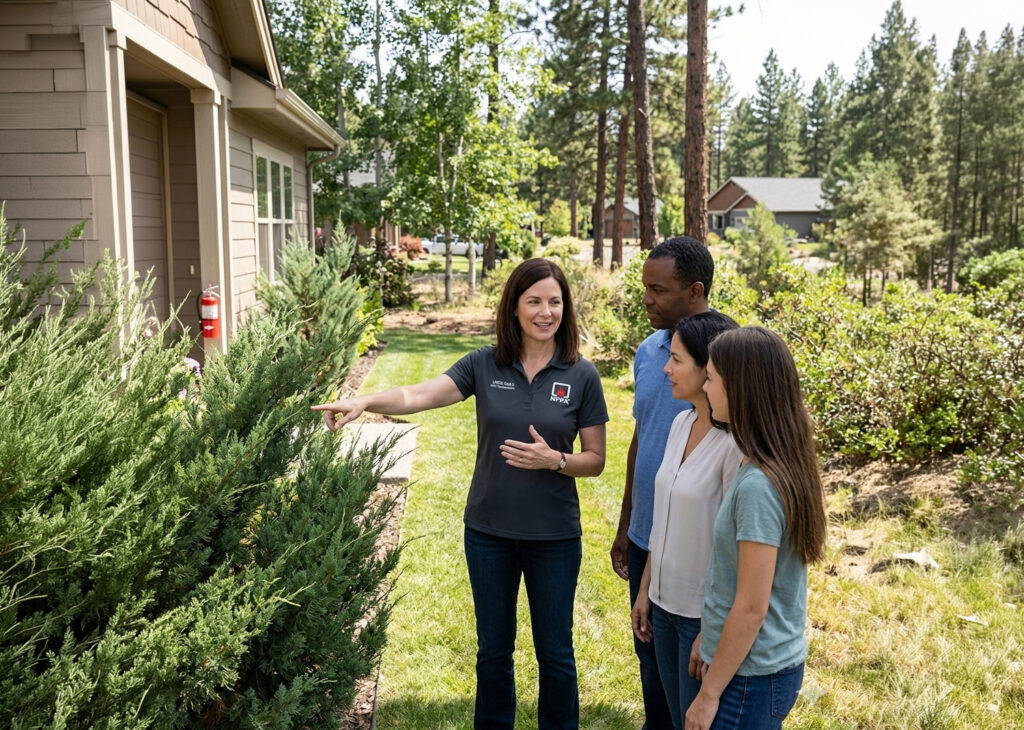
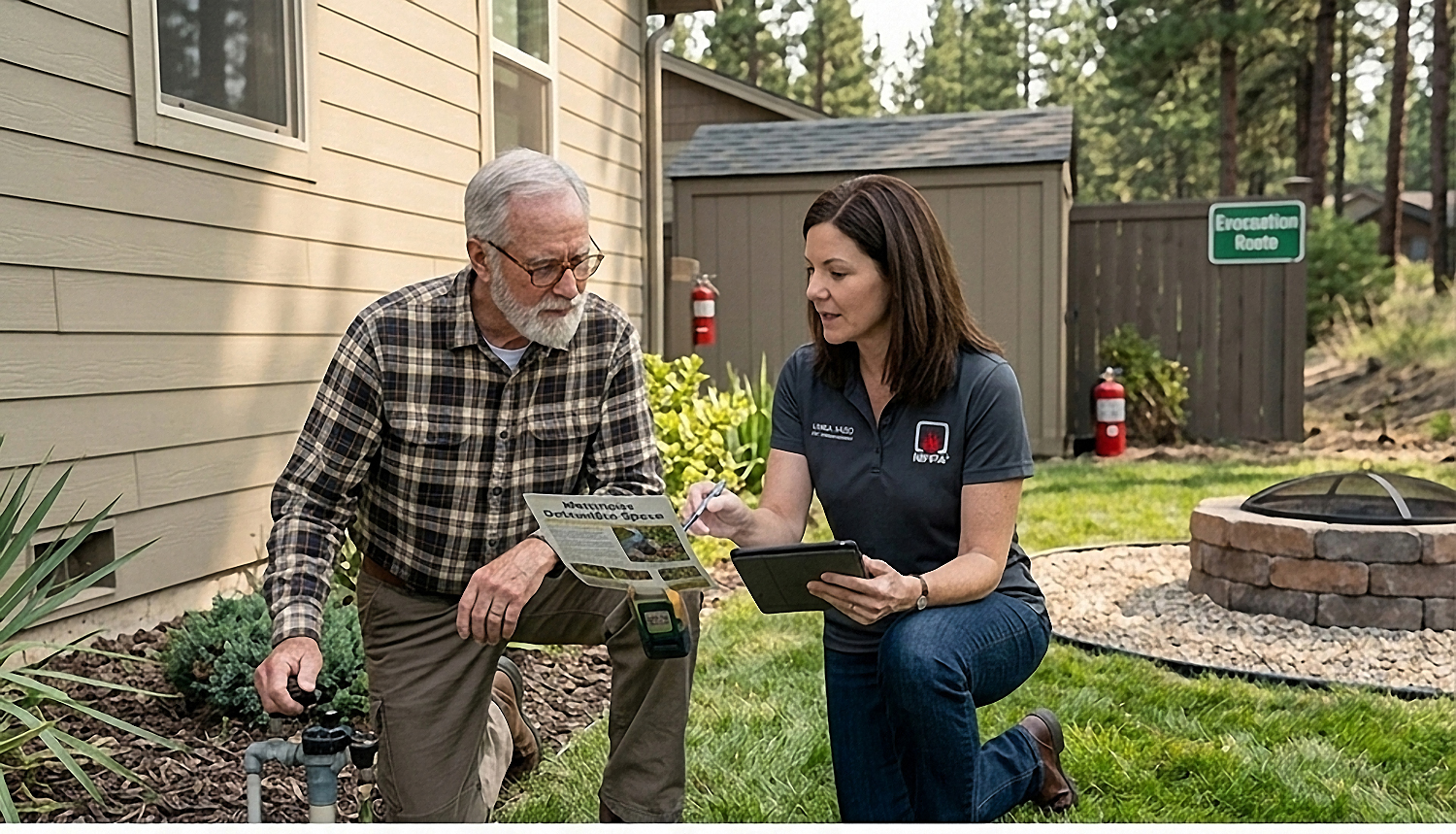
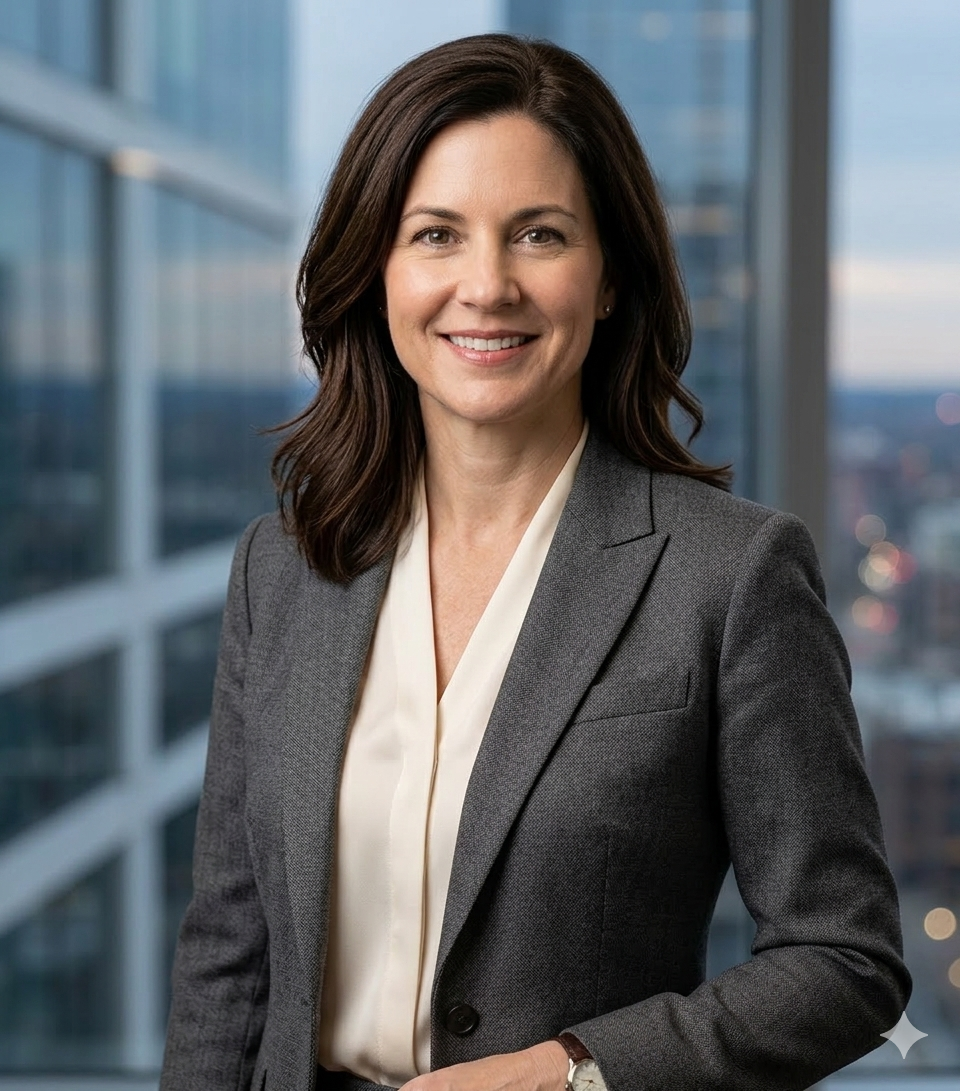
For more than two decades, Linda Sabo has stood at the intersection of landscape design and life safety — helping homeowners, neighborhoods, and Wildland-Urban Interface (WUI) communities transform their properties from wildfire vulnerabilities into resilient, fire-resistant sanctuaries. Where others see dry brush and defensible space checklists, Linda sees an opportunity: the chance to build landscapes that are simultaneously beautiful, ecologically sound, and engineered to give families a fighting chance when fire approaches.
Based in the fire-prone regions of the American West — and consulting across high-risk communities from the Sierra Nevada foothills to the chaparral corridors of Southern California — Linda’s mission has always been the same: equip every homeowner with the knowledge, the plant palette, and the practical landscape strategy to reduce wildfire risk without sacrificing the outdoor spaces they love. Her work doesn’t begin with fear. It begins with a plan.
Her professional certifications include:
• Firewise USA® Certified Professional — National Fire Protection Association (NFPA)
• ISA Certified Arborist — International Society of Arboriculture
• Certified Landscape Professional (CLP) — National Association of Landscape Professionals
• UC Master Gardener Certification — University of California Cooperative Extension
• USDA Forest Service Community Wildfire Defense Grant Reviewer
Her public education work spans community workshops, hands-on demonstration gardens, and university extension partnerships — all aimed at making the science of fire-safe landscaping accessible to homeowners standing in their backyards, unsure of where to start.

Linda holds a Bachelor of Science in Horticulture with a concentration in Landscape Design, complemented by graduate-level coursework in Fire Ecology and Urban Forestry. That academic foundation, combined with field-hardened experience in some of the West's most fire-challenged communities, defines the depth she brings to every assessment and consultation.
Linda is an active member of the National Fire Protection Association (NFPA), the American Society of Landscape Architects (ASLA), the Society of American Foresters, and sits on the advisory board of her regional Fire Safe Council — an organization she helped establish more than fifteen years ago. She has consulted directly with county fire departments, state forestry agencies, municipal planning commissions, and dozens of homeowners' associations, navigating Firewise USA® site recognition requirements.
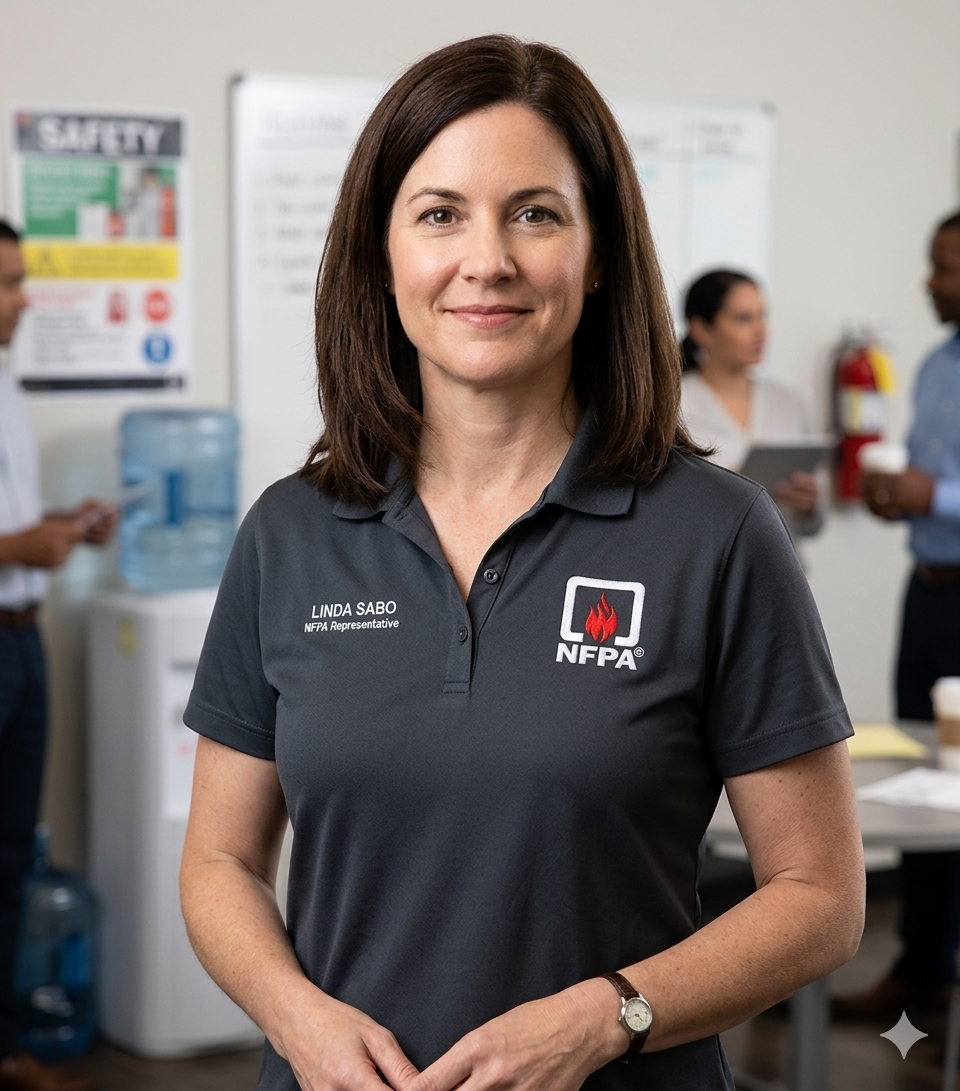
Linda’s expertise spans the full spectrum of Firewise landscaping — from the science of ember transport and ignition to the hands-on artistry of planting regionally appropriate, fire-resistant native species. Her core specializations include:
• Firewise landscaping design and plant selection for WUI properties
• Defensible space planning across Zones 0–3 (the Home Ignition Zone through the extended perimeter)
• Fire-resistant native plant communities and site-specific planting palettes
• Ember-resistant home hardening guidance (vents, decks, fencing materials)
• Wildfire risk assessments for residential and multi-parcel properties
• Community-wide fire mitigation planning and Firewise USA® site applications
• Irrigation system design optimized for fire-resistant landscape maintenance
• Post-fire landscape recovery, soil stabilization, and ecological restoration
• HOA and municipality Firewise compliance consulting
• Homeowner education programs, community workshops, and demonstration gardens
Two of these areas deserve special mention. Linda’s defensible space work goes well beyond regulatory compliance. She approaches Zone 0 — the non-combustible buffer immediately surrounding the structure — as a design challenge, not a punishment, helping homeowners understand that gravel, flagstone, and strategically placed succulents can create a landscape feature, not just a cleared zone. Similarly, her post-fire restoration work is among the most emotionally significant she does: guiding families through the process of rebuilding a landscape after loss while incorporating fire resilience from the ground up.

The most persistent myth Linda encounters — in workshops, on-site consultations, and in the comments section of every wildfire preparedness article — is that a fire-safe landscape is a dead landscape. That Firewise means gravel driveways, concrete, and the absence of color. Linda has spent her career proving that wrong.
"Fire-resistant doesn't mean fire-proof, and it certainly doesn't mean boring," Linda explains. "Some of the most stunning residential landscapes I've ever seen are Firewise landscapes. Native bunchgrasses, drought-adapted flowering perennials, low-growing manzanita, and properly spaced oaks — these aren't compromises. They're the right plants for the right place, and they happen to behave better in a fire environment than a lawn full of juniper."
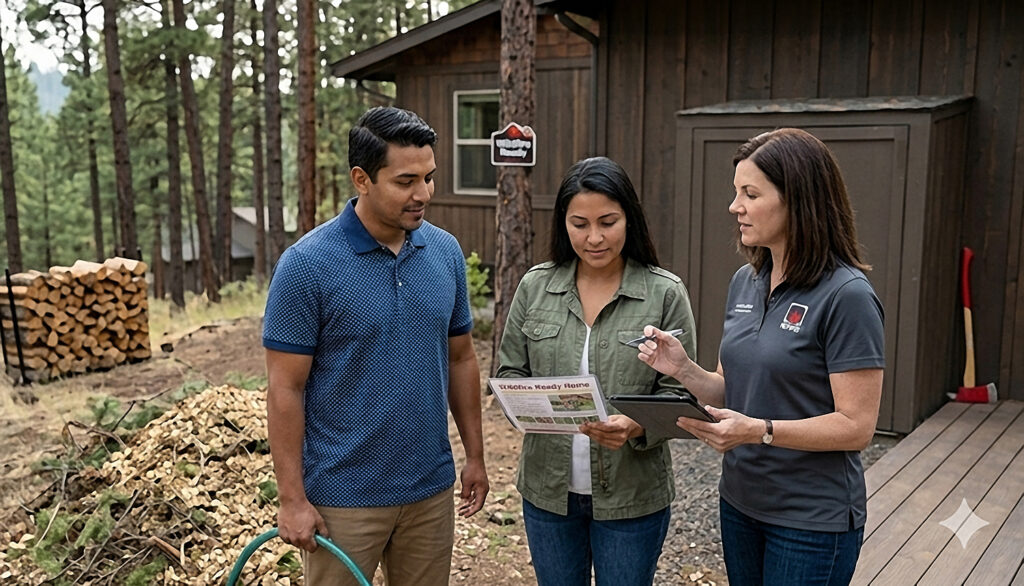
At the heart of Linda’s philosophy is a respect for the ecology of fire-prone landscapes. She believes Firewise landscaping works best when it aligns with nature — selecting plants native to the region, understanding how fire historically moved through the landscape, and helping homeowners become informed stewards of their land rather than passive occupants. As wildfire seasons grow longer, WUI zones expand deeper into formerly rural communities, and insurance markets retreat from high-risk regions, Linda sees homeowner education not as a nice-to-have but as a genuine act of community protection.

Over the course of her career, Linda has conducted Firewise risk assessments for more than 400 residential properties across high-risk fire corridors in California, Oregon, Arizona, and Colorado. She has guided seven separate neighborhoods through the full Firewise USA® site recognition process — a multi-year commitment that requires community-wide buy-in, documented mitigation work, and annual renewal.
Among her most impactful collaborations: a multi-year partnership with a Northern California county fire department, as well as Arizona Fire Departments, to develop a residential defensible space outreach program that reached more than 1,200 homeowners in a single season. The program, which Linda designed and co-facilitated, used before-and-after landscape photography, plant identification tools, and a simplified Zone 1 and Zone 2 compliance checklist that fire inspectors have since adopted as a standard handout during home visits.
Linda’s work has been featured in regional fire safety publications, referenced in state forestry agency educational materials, and cited in a university extension white paper on WUI community preparedness. She has appeared as a guest speaker at state fire conferences, local garden club events, and community emergency preparedness forums — always tailoring her message to the audience in front of her, whether that’s a room full of fire professionals or a backyard gathering of neighbors who just watched the hills burn.
Linda is the primary content contributor to this website, where she writes in-depth guides, plant profiles, and practical how-to articles that cover every aspect of Firewise landscaping. Her published resources include:
• Comprehensive plant selection guides for Western WUI landscapes (zone-by-zone)
• Defensible space compliance checklists for Zones 0 through 3
• Step-by-step guides to applying for Firewise USA® site recognition
• Seasonal maintenance calendars for fire-resistant landscapes
• Post-fire landscape recovery guides for homeowners and HOAs
• Guest articles contributed to regional fire safe council newsletters and state forestry publications
• Educational webinar series: “Firewise From the Ground Up” (six-part homeowner series)
Browse Linda’s complete library of Firewise resources → [Resource Library]

Linda grew up in the Sierra Nevada foothills, where wildfire was not an abstract risk but a seasonal reality — something her family prepared for each summer the way others might prepare for winter storms. That early grounding gave her a perspective on wildfire that data alone cannot provide: an understanding of what it feels like to watch smoke columns build over the ridge, and what it means to a family when the landscape around their home holds or fails.
Today, Linda volunteers with her local Fire Safe Council, coordinates an annual community chipping program that removes thousands of pounds of hazardous vegetation from residential properties each year, and serves as a founding member of a regional native plant society focused on drought-adapted, fire-appropriate landscaping for WUI homeowners. She is a vocal advocate for stronger WUI development codes, mandatory ignition-resistant construction standards, and the integration of Firewise landscaping requirements into HOA governing documents — changes she believes are long overdue.
In her community, Linda is the neighbor people call before fire season — and, unfortunately, sometimes after. Her reputation is built not on credentials alone, but on showing up with practical answers, honest assessments, and the kind of grounded expertise that only comes from decades of working in fire country.
Whether you’re a homeowner staring down a fire inspector’s notice, a community leader trying to move your neighborhood toward Firewise USA® recognition, or simply someone who wants their landscape to be safer and more beautiful, Linda’s writing, resources, and consulting work are here to help you take the next step.
• Read Linda’s articles and guides → [Link to Article Archive]
• Contact Linda for residential consultations or speaking engagements → [Contact Page Link]
• Follow Linda on LinkedIn → [LinkedIn URL]
• Firewise landscape inspiration → [Pinterest Board]
“My goal is simple — I want every homeowner in fire country to feel confident, not afraid. A well-planned Firewise landscape is your first and best line of defense.”
— Linda Sabo, Firewise Landscaping Expert