
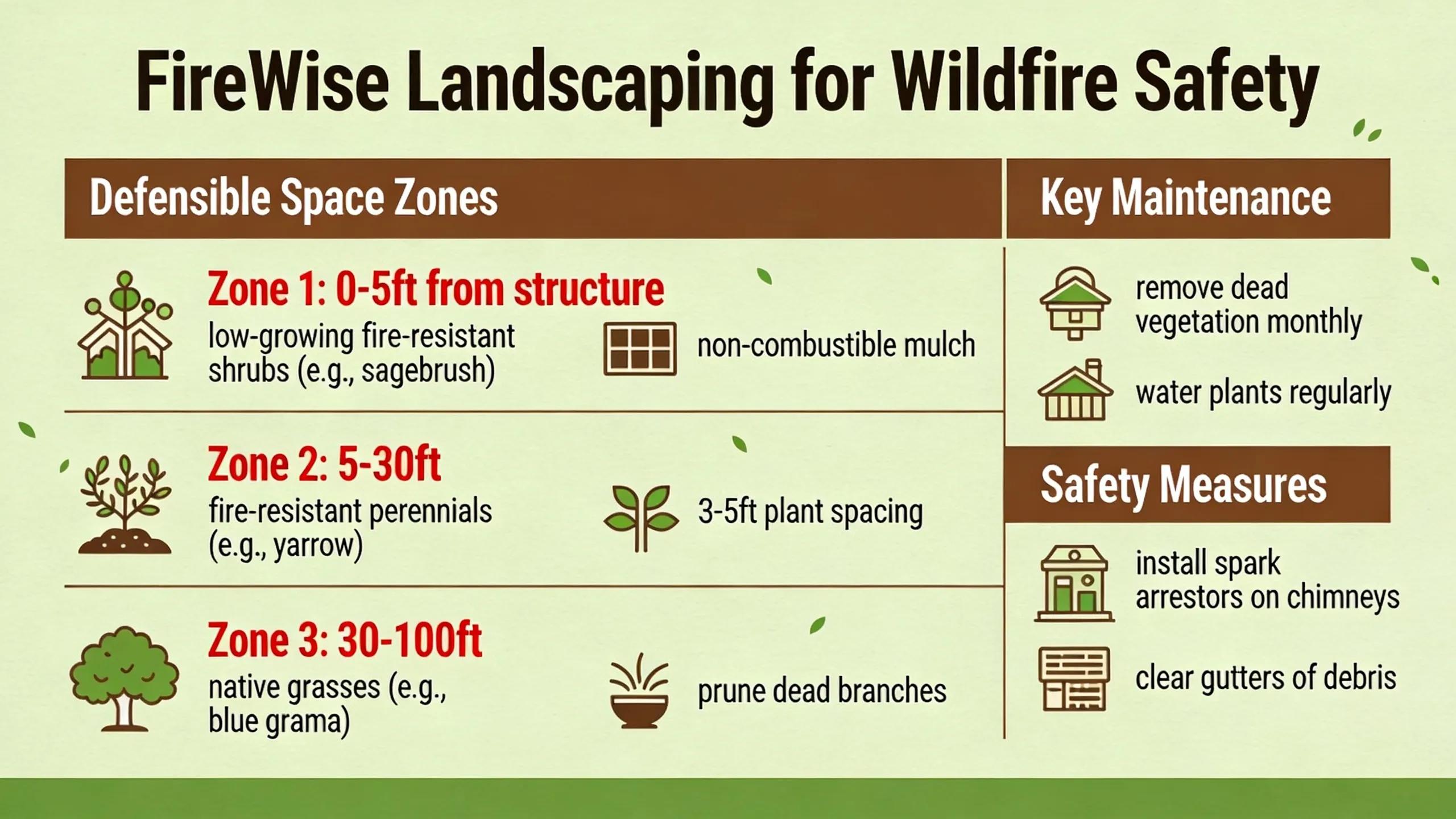
In Prescott, Arizona, the threat of wildfires is a significant concern for homeowners and communities alike. FireWise landscaping is a proactive approach that focuses on creating defensible spaces around properties to mitigate wildfire risks. This article will explore the essential guidelines for defensible space, the role of fire-resistant plants, and effective landscaping techniques that enhance fire safety. By understanding these concepts, homeowners can take actionable steps to safeguard their properties while contributing to community fire safety. We will also discuss the specific regulations in Prescott, best practices for landscape maintenance, and how Yavapai Firewise Landscaping can help implement these strategies effectively.
Defensible space refers to the buffer zone between a structure and the wildland area that is designed to reduce the risk of wildfire damage. In Prescott, creating defensible space is crucial for shielding homes from approaching fires. The guidelines emphasize the importance of maintaining a clear area around properties, which involves removing flammable materials and managing vegetation effectively. This proactive measure not only enhances residents’ safety but also aids firefighters in controlling wildfires.
Yavapai Firewise Landscaping specializes in creating defensible spaces tailored to the unique needs of Prescott properties. Their expertise ensures that homeowners can effectively implement these guidelines, enhancing both safety and property value.
Defensible space reduces wildfire risk by creating a buffer zone that limits the ability of flames to reach a structure. This is achieved through several mechanisms:
Understanding these principles is essential for homeowners looking to shield their properties effectively.
Further research emphasizes the critical role of defensible space in mitigating wildfire damage and provides a conceptual model for its effective implementation.
Defensible Space Design for Wildfire Risk Reduction
Destructive wildfire disasters are escalating globally, challenging existing fire management paradigms. The establishment of defensible space around homes in wildland and rural urban interfaces can help to reduce the risk of house loss and provide a safe area for residents and firefighters to defend the property from wildfire. Although defensible space is a well-established concept in fire management, it has received surprisingly limited scientific discussion. We developed a conceptual model of defensible space framed around the key recommended approaches to mitigate fire attack mechanisms, which address fuel types, amount, and spatial distribution. Zonation within the defensible space is commonly recommended; reduction of all fuels, particularly dead plant material, is suggested in close proximity to a house. In an intermediate space, guidelines focus on minimizing fuel horizontal and vertical connectivity. In the outer part of the garden, trees can provide canopy shielding, but management of on-ground fuel is still recommended.
Garden desi
gn can reduce wildfire risk and drive more sustainable co-existence with wildfire, S Ondei, 2024
In Prescott, specific regulations govern the maintenance of defensible space to ensure community safety. Key regulations include:
These regulations are designed to create a safer environment for all residents and are enforced by local authorities.
Selecting the right plants is crucial for effective fire-wise landscaping. The best fire-resistant plants for Prescott include:
Incorporating these plants into landscaping not only enhances fire safety but also contributes to the aesthetic appeal of properties.
For those in Arizona’s higher elevations, specific guidance on fire-resistant plant materials can further inform landscaping choices.
Arizona Fire-Resistant Plant Materials for High Elevations
The list of trees and shrubs in this bulletin are plants that are known to have fire resistant characteristics.
FIREWISE Plant Materials for 3,000 ft. and Higher Elevations, 2011
Fire-resistant plants possess specific characteristics that make them suitable for landscaping in fire-prone areas. These include:
Understanding these characteristics can guide homeowners in selecting appropriate plants for their landscapes.
Selecting and maintaining fire-resistant plants involves several best practices:
Yavapai Landscaping, LLC can assist homeowners in selecting and maintaining fire-resistant plants to ensure optimal fire safety.
This table outlines various fire-resistant plants suitable for Prescott’s landscaping, highlighting their key characteristics, such as flammability and maintenance needs. This comparison helps homeowners make informed choices for effective fire mitigation.
In summary, choosing the appropriate fire-resistant plants, as indicated in the table, can significantly enhance fire safety while also maintaining the aesthetic value of properties in Prescott. Homeowners should consider both the flammability ratings and the water requirements when selecting plants for their gardens.
Wildfire mitigation landscaping techniques are designed to safeguard properties from wildfires. These techniques include:
Implementing these techniques not only shields properties but also enhances the overall landscape.
Firebreaks are crucial in preventing the spread of wildfires. Effective installation methods include:
These methods are essential for creating a robust defense against wildfires.
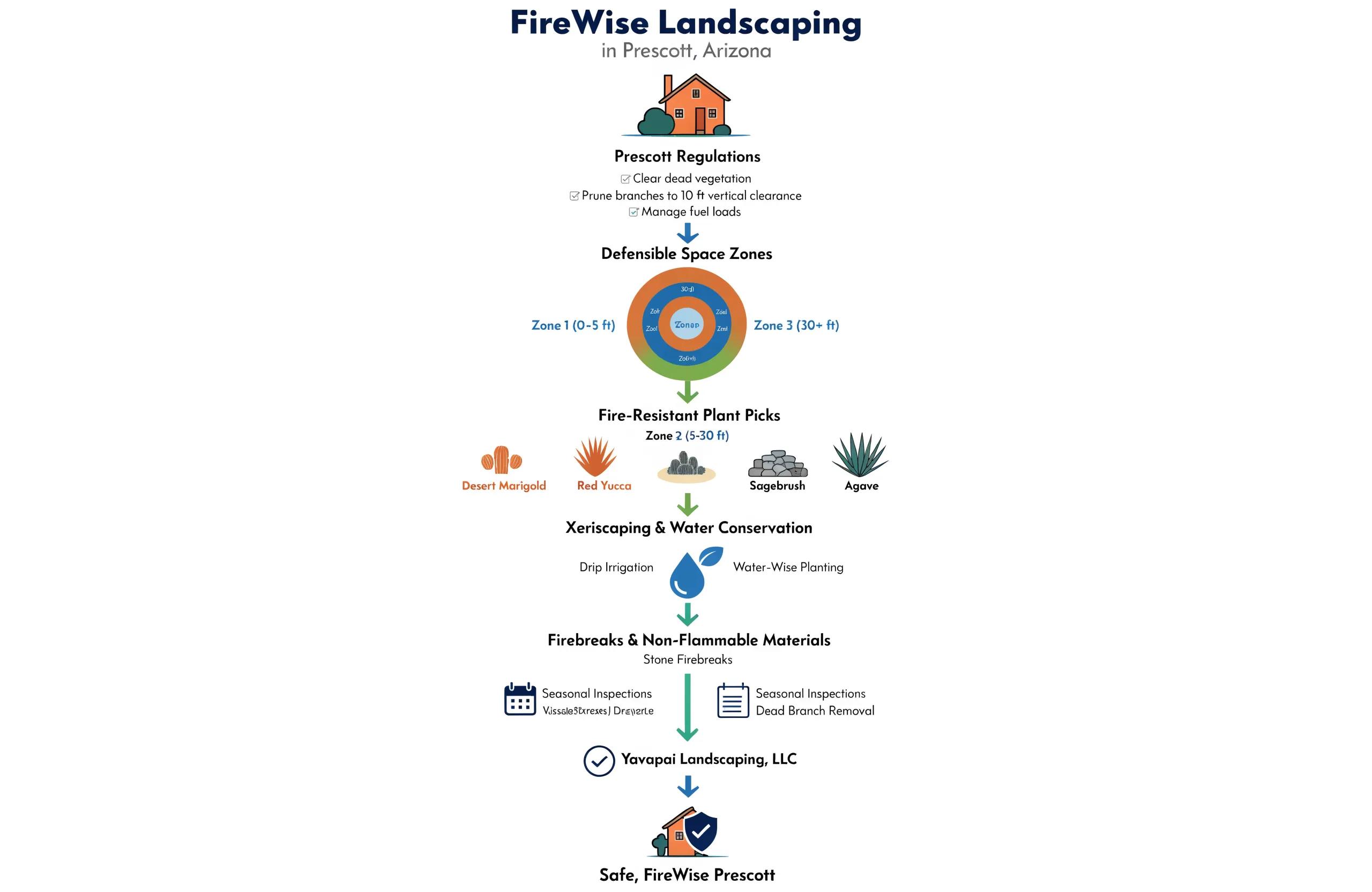
Xeriscaping is a landscaping approach that emphasizes water conservation while enhancing fire safety. Key benefits include:
By adopting xeriscaping principles, homeowners can create beautiful, fire-safe, and environmentally friendly landscapes.
This integrated approach is further supported by studies highlighting the importance of combining fire-protective and low-water landscaping for homeowners in fire-prone, drought-affected regions.
Fire-Protective & Low-Water Landscaping for Homeowners
Because of climate change, population expansion, and other factors, both wildfire and drought are becoming pressing concerns in Utah. Home landscaping can reduce risk of damage from wildfire (fire-protective landscaping) and contribute to lower water use (low-water landscaping). While it is important for homes in the wildland-urban interface in Utah to have landscaping that is both fire-protective and low-water, best practices for the two are often taught in ways that make them seem mutually exclusive. This project used existing research and best practices to develop a learning experience to teach homeowners how to implement landscaping that is both fire-protective and low-water.
Development
of an Instructional Course on Fire-Protective and Low-Water Landscaping in Utah, 2022
Maintaining landscapes for fire safety involves several best practices:
These practices are vital for ensuring that landscapes remain safe and resilient against wildfires.
FireWise landscaping requires consistent maintenance to remain effective. Homeowners should consider the following:
Yavapai Landscaping, LLC offers comprehensive maintenance services to help homeowners keep their landscapes safe and beautiful.
Maintaining defensible space zones involves several key steps:
These steps are crucial for ensuring that properties remain guarded from wildfire threats.
Water conservation is an integral part of FireWise landscaping. Key aspects include:
By integrating water conservation with FireWise landscaping, homeowners can create landscapes that are both beautiful and functional.
Research underscores the effectiveness of integrating water conservation with fire-protective landscaping to mitigate wildfire risks.
Fire-Protective & Low-Water Landscaping for Wildfire Risk
Home landscaping can reduce the risk of wildfire damage (fire-protective landscaping) and lower water use (low-water landscaping). While it is important for homes in the wildland-urban interface in Utah to have landscaping that is both fire-protective and low-water, best practices for the two are often taught in ways that make them seem mutually exclusive.
Development of an Instructional Course on Fire-Protective and Low-Water Landscaping in Utah, 2022
Xeriscaping strategies that support fire safety and water efficiency include:
These strategies are essential for creating sustainable landscapes that prioritize both fire safety and water conservation.
Homeowners can balance aesthetics with firewise water conservation through several approaches:
By focusing on these strategies, homeowners can create beautiful landscapes that are both fire-safe and water-efficient.
Choosing Yavapai Firewise Landscaping, for FireWise landscaping services offers several advantages:
By partnering with Yavapai Landscaping, homeowners can confidently apply Yavapai Firewise landscaping strategies that safeguard their properties.
Yavapai Landscaping offers valuable local expertise in wildfire prevention through:
This expertise is essential for homeowners looking to effectively enhance their fire safety measures.
Customer testimonials highlight the effectiveness of Yavapai Landscaping’s FireWise projects. Key insights include:
These testimonials reflect the company’s dedication to helping homeowners achieve their fire safety goals through effective landscaping solutions.
Yavapai Landscaping, LLC is a locally owned and operated landscaping company based in Prescott, Arizona, specializing in FireWise landscaping and wildfire risk mitigation. The company’s team includes certified landscape professionals with extensive experience in wildfire management, horticulture, and sustainable landscaping practices specialized for the Prescott area’s unique ecology and fire risk factors.
Certifications and Training:
Partnerships and Community Engagement:
This comprehensive expertise and community involvement underscore Yavapai Landscaping’s commitment to delivering trustworthy, effective, and locally adapted wildfire prevention landscaping services.
Yavapai Landscaping, LLC is committed to full compliance with Prescott city regulations and permit requirements. While some past customer feedback has noted challenges regarding permit acquisition and process navigation, the company has since enhanced its project management procedures to better support homeowners through all necessary permitting steps. Yavapai Landscaping provides clear guidance on permit needs, coordinates with local authorities, and ensures that all landscaping installations meet or exceed Prescott’s fire safety and environmental regulations.
Homeowners working with Yavapai Landscaping can expect transparent communication, assistance with regulatory compliance, and adherence to best practices that protect both their investment and local community safety.